The intersection of neuroscience and consumer wellness has produced a transformative category of tools designed to address one of the most pervasive mental health challenges of our time: anxiety. Neurowellness anxiety relief devices represent a convergence of decades of clinical research, advances in wearable technology, and a growing societal demand for non-pharmaceutical approaches to mental well-being. These devices ranging from vagus nerve stimulators and neurofeedback headsets to vibroacoustic relaxation tools offer users a novel pathway to modulate their nervous system and achieve a state of calm without relying solely on medication or traditional therapy alone. The global neurofeedback headsets for anxiety market alone is projected to grow from $444.5 million in 2025 to over $1 billion by 2035, reflecting both consumer appetite and expanding clinical validation. This article explores the science, the available technologies, and the practical considerations for anyone considering these devices as part of a comprehensive anxiety management strategy.
Understanding Anxiety and the Nervous System
To appreciate how neurowellness devices function, it is essential to understand the biological underpinnings of anxiety. The autonomic nervous system, which governs involuntary bodily functions, consists of two primary branches: the sympathetic nervous system, responsible for the “fight or flight” stress response, and the parasympathetic nervous system, which promotes “rest and digest” functions. Chronic anxiety is often characterized by an overactive sympathetic response and insufficient parasympathetic counterbalance. The vagus nerve, the tenth cranial nerve, serves as the primary conduit for parasympathetic signaling, connecting the brainstem to the heart, lungs, and digestive tract. Stimulating this nerve through non-invasive means has therefore emerged as a promising strategy for reducing anxiety symptoms and restoring autonomic balance.
Types of Neurowellness Anxiety Relief Devices
The market for anxiety relief devices encompasses several distinct technological approaches, each with its own mechanism of action and user experience. Understanding these categories is the first step toward selecting an appropriate device.
A. Vagus Nerve Stimulation (VNS) Devices
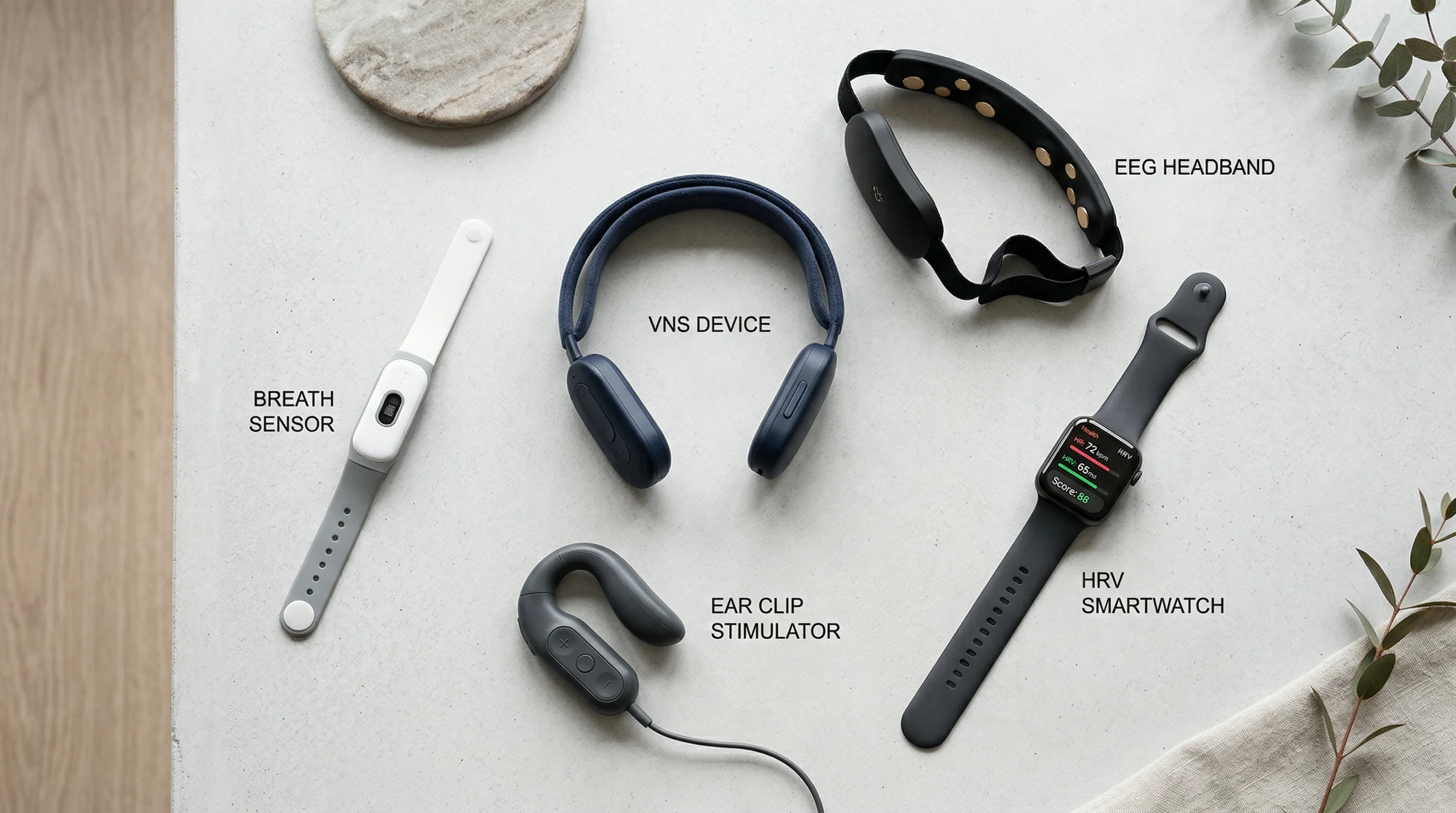
These devices deliver mild electrical impulses to the auricular branch of the vagus nerve, typically via an earpiece or neckband. Transcutaneous vagus nerve stimulation (tVNS) has been shown to influence brain regions such as the locus coeruleus and the nucleus of the solitary tract through noradrenergic pathways, with a favorable safety profile. Products like Nurosym, Pulsetto, and Truvaga fall into this category.
B. Neurofeedback Headsets
Neurofeedback devices use electroencephalography (EEG) sensors to monitor brainwave activity in real time and provide feedback often through audio or visual cues to help users self-regulate their neural oscillations. Protocols targeting alpha and theta rhythms have been linked to improvements in anxiety and depression. The Muse headband and NeoRhythm are prominent examples.
C. Vibroacoustic and Vibration-Based Devices
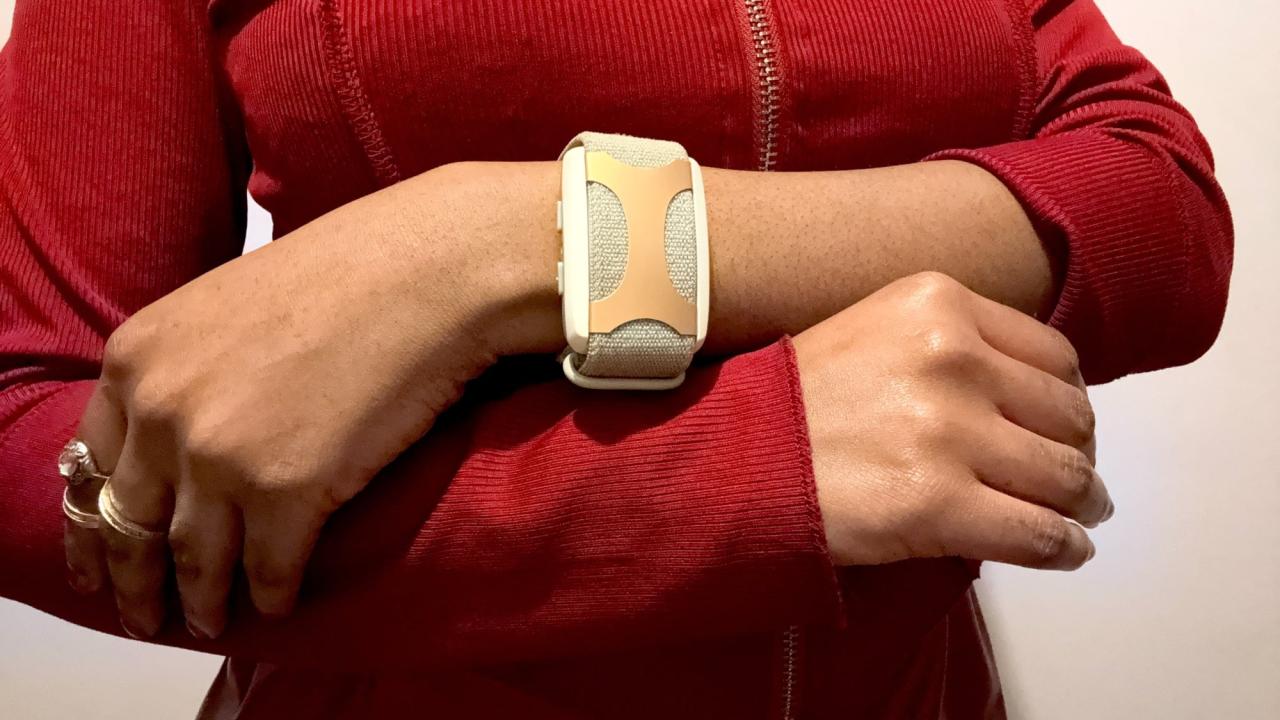
These tools use gentle vibrations, sometimes combined with sound, to promote relaxation and grounding. The Apollo Neuro, worn on the wrist or ankle, delivers silent vibrations that may help reduce stress symptoms such as difficulty breathing or focusing. Sensate, a chest-worn device, combines vibration and sound for guided relaxation sessions.
D. Cranial Electrotherapy Stimulation (CES) Devices
CES devices apply low-level electrical currents to the earlobes or scalp to modulate brain activity. Research has indicated that CES can produce changes in brain physiology relevant to anxiety, with some studies reporting anxiety and depression remission rates exceeding 70 percent. The Fisher Wallace Stimulator is a well-known example.
E. Virtual Reality-Enhanced Biofeedback Systems
Emerging technologies integrate EEG biofeedback with virtual reality environments, dynamically adjusting the immersive experience based on the user’s real-time emotional state. A randomized controlled trial of 89 patients found that meditation therapy integrated with EEG biofeedback achieved outcomes comparable to cognitive behavioral therapy for anxiety.
Mechanisms of Action: How These Devices Work
The therapeutic effects of neurowellness devices operate through several interconnected physiological pathways.
A. Parasympathetic Activation
By stimulating the vagus nerve, these devices aim to bring the “rest and digest” system online, counteracting the sympathetic dominance that characterizes anxiety. This is often described as a bottom-up influence on neural dynamics, modulating electrophysiological activity to promote calm.
B. Neuroplasticity and Self-Regulation
Neurofeedback devices leverage the brain’s capacity for neuroplasticity. By providing real-time information about brainwave patterns, they enable users to learn often unconsciously how to shift toward more relaxed states. This top-down regulation influences psychological outcomes through learned self-regulation.
C. Interruption of Stress Loops
Vibration-based devices may interrupt rumination and stress loops by providing a grounding sensory input. Users of vagus nerve stimulators have reported that the devices facilitate a calmer response to stress, anxiety, and panic, described as feeling like “an emotional massage”.
D. Neuroendocrine Modulation
Some research suggests that these interventions may influence cortisol and other stress biomarkers, though findings are mixed. One pilot study found that while neurofeedback reduced anxiety symptoms, cortisol levels remained unchanged, suggesting that psychological benefits may precede or operate independently of neuroendocrine shifts.
Clinical Evidence and Research Findings
The scientific literature on neurowellness anxiety relief devices is growing, though it remains an area of active investigation with varying levels of evidence for different technologies.
A. Vagus Nerve Stimulation
A single-arm prospective study of home-based transcutaneous auricular VNS for generalized anxiety disorder evaluated safety, feasibility, and preliminary clinical outcomes, with adverse events of interest including local skin irritation, headache, and dizziness. Another study on the Apollo Neuro device as an adjunct to ketamine-assisted therapy found limited additional benefit when used alongside the primary treatment, though both groups showed median reductions in anxiety symptoms.
B. Neurofeedback
A pilot study investigating the individual and combined effects of neurofeedback and tVNS in non-clinical adults found that neurofeedback was associated with significant reductions in anxiety and depressive symptoms, while tVNS produced distinct electrophysiological changes. The authors noted that these methods may operate through distinct pathways and recommended replication in larger trials.
C. Cranial Electrotherapy Stimulation
Real-world evaluations of at-home CES for sleep, anxiety, and depression have reported encouraging outcomes, with anxiety and depression remission rates of 72.3 percent and 71.2 percent respectively, maintained three weeks post-intervention. However, the evidence base for CES remains contested, with some reviews calling for more rigorous sham-controlled trials.
D. Virtual Reality and EEG Biofeedback
The randomized controlled trial of VR-enhanced EEG biofeedback demonstrated that post-treatment anxiety scores significantly decreased across all groups, with the combination of home-based and VR approaches showing superior subjective improvement on the Self-Rating Anxiety Scale.
Choosing the Right Device: Key Considerations
Selecting a neurowellness anxiety relief device requires careful consideration of individual needs, lifestyle, and budget. The following criteria can guide this decision-making process.
A. Mechanism of Action
Determine whether you prefer a device that works through electrical stimulation (VNS, CES), neurofeedback, or vibration and sound. Each approach offers a different user experience and may be more or less suited to your sensitivity and preferences.
B. Ease of Use and Integration
Consider how the device fits into your daily routine. The Apollo Neuro is designed for all-day wear, making it suitable for busy lifestyles, while Sensate is intended for dedicated relaxation sessions. Hands-free neckbands like Pulsetto allow for passive use, whereas handheld devices like Hoolest require active engagement.
C. Clinical Support and App Ecosystem
Many devices come with companion apps that offer guided programs, tracking, and personalized recommendations. Pulsetto’s premium membership, for example, unlocks additional stimulations, meditations, and breathing exercises. Evaluate whether the app enhances your experience or adds unnecessary cost.
D. Cost and Long-Term Value
Prices for these devices range from approximately $159 for the Hoolest VeRelief Prime to $349 for the Apollo Neuro, with subscription fees potentially adding to the total cost of ownership. Consider the warranty, money-back guarantee, and whether the device requires ongoing purchases such as gel tips or subscription renewals.
E. Safety Profile and Contraindications
While generally well-tolerated, these devices are not suitable for everyone. Individuals with implanted medical devices such as pacemakers, cochlear implants, or surgical clips should exercise caution, as electrical stimulation may interfere with these implants. Pregnant or breastfeeding individuals should consult a healthcare provider before use.
Safety, Side Effects, and Responsible Use
Neurowellness devices are designed to be non-invasive and drug-free, but responsible use requires awareness of potential side effects and limitations.
A. Common Side Effects
Reported adverse events include local skin irritation, pain or discomfort at the stimulation site, headache, dizziness, nausea, and sleep disturbance. These effects are typically mild and resolve after discontinuation.
B. Contraindications
As noted, individuals with certain medical implants or neurological conditions should avoid or use these devices only under medical supervision. The Sparrow Link clinical trial for first responders explicitly excludes individuals with certain implants, neurological conditions, or ear abnormalities.
C. Duration and Frequency
Overuse can be counterproductive. Dr. Nancy Hammond notes that vagus nerve stimulators work best when used one or two times a day for a few minutes to up to 45 minutes, and that more than eight hours daily can damage the vagus nerve. Following manufacturer guidelines and clinical recommendations is essential.
D. Not a Replacement for Comprehensive Care
Experts caution that commercial devices should not be considered a “quick fix” for anxiety or other mental health issues. These tools are best viewed as adjunctive supports within a broader treatment plan that may include therapy, lifestyle modifications, and, where appropriate, medication.
The Future of Neurowellness Technology
The trajectory of neurowellness anxiety relief devices points toward greater personalization, integration, and accessibility.
A. AI-Driven Personalization
Artificial intelligence is increasingly being used to interpret individual brain activity and provide customized feedback, enhancing effectiveness and user satisfaction. Adaptive algorithms improve performance over time, tailoring interventions to unique neural patterns.
B. Expansion into Remote Healthcare
The growth of telehealth and remote therapy creates significant opportunities for these devices. Neurofeedback wearables allow users to conduct brain-training sessions from home while sharing data with clinicians remotely, supporting continuous mental health support.
C. Integration with Mobile Health Platforms
Ongoing progress in smartphone integration is improving the precision and usability of these devices, making them more accessible to diverse populations and age groups.
D. Consumer Neurotech Market Growth
Dedicated consumer neurotech firms now account for 60 percent of the global neurotechnology landscape, outnumbering medical-focused firms since 2018. This shift signals a broader trend toward preventive, self-directed mental wellness tools.
Conclusion
Neurowellness anxiety relief devices offer a compelling, drug-free avenue for individuals seeking to manage anxiety and enhance their emotional resilience. From vagus nerve stimulators and neurofeedback headsets to vibroacoustic tools and cranial electrotherapy devices, the range of options reflects both the complexity of anxiety and the ingenuity of modern technology. While clinical evidence continues to accumulate and varies across device categories, the safety profile of most non-invasive devices is favorable, and user reports of improved calm and reduced reactivity are encouraging. As with any health intervention, informed decision-making grounded in personal needs, professional guidance, and realistic expectations is paramount. These devices are not a panacea, but they represent a meaningful addition to the evolving toolkit for mental well-being in the twenty-first century.