

The concierge medicine model once a niche service reserved for the ultra-wealthy has transformed into a rapidly expanding sector of the American healthcare landscape. Between 2018 and 2023, the number of concierge and direct primary care practices in the United States surged by 83%, while the clinician workforce in these practices grew by 78%. This unprecedented expansion has been accompanied by a parallel escalation in membership fees, with the median individual membership reaching $3,200 annually in 2026, an 8.4% year-over-year increase that has outpaced general healthcare inflation. This article examines the multifaceted forces driving the concierge medicine cost surge, the market dynamics reshaping the industry, and the profound implications for patients, physicians, and the broader healthcare system.
Understanding the Concierge Medicine Model
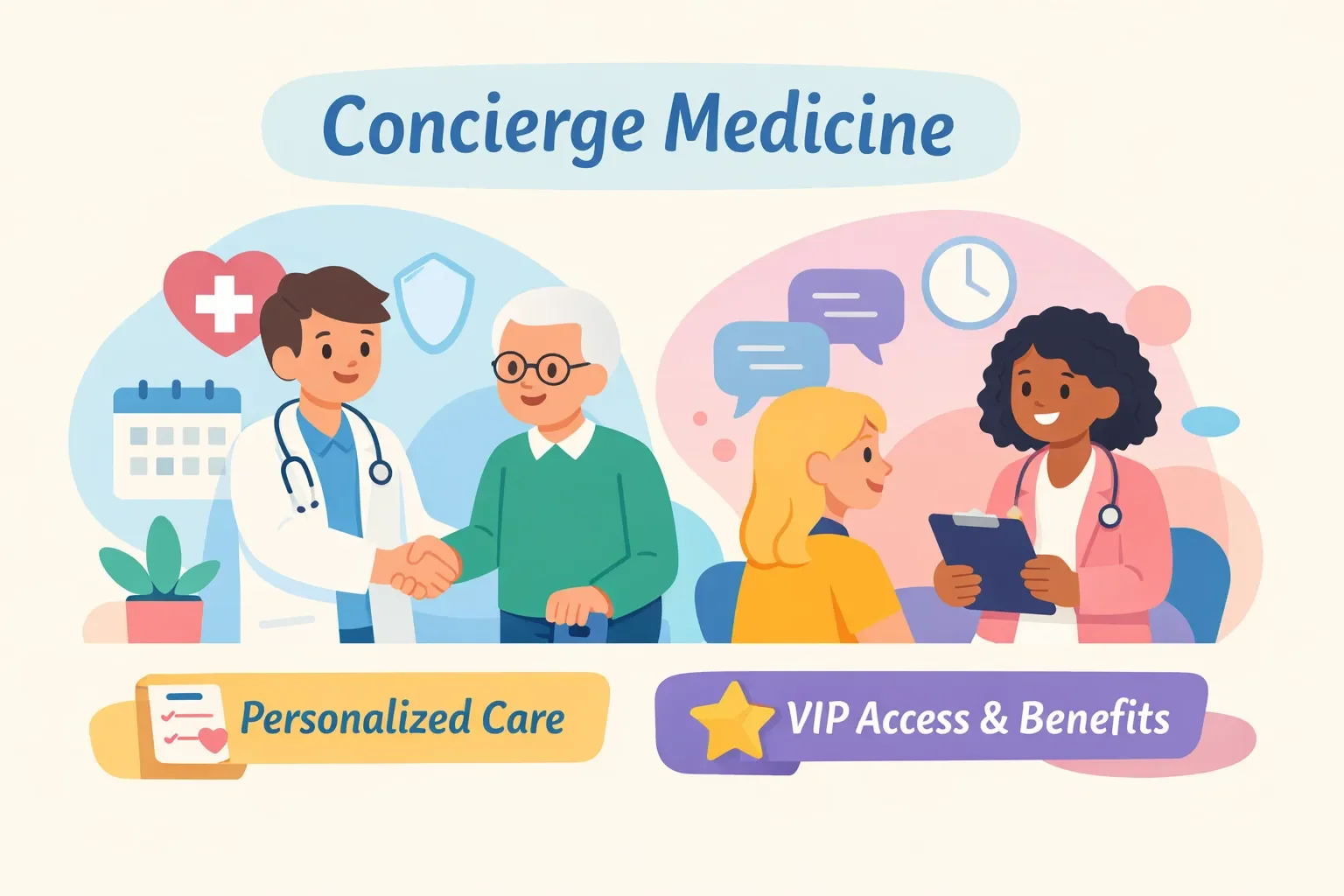
Concierge medicine, also known as retainer medicine or membership medicine, represents a departure from the traditional fee-for-service healthcare model. In this arrangement, patients pay a periodic retainer or membership fee typically monthly or annually in exchange for enhanced access to their physician, personalized care, and a markedly reduced patient panel. The model was pioneered in 1996 with the establishment of MD2 in Seattle by Dr. Howard Maron and Dr. Scott Hall, initially positioning itself as “VIP medicine” accessible only to affluent patients.
The operational structure of concierge practices differs fundamentally from conventional primary care. While traditional physicians may manage patient panels exceeding 2,000 individuals, concierge physicians typically limit their panels to between 300 and 600 patients. This reduced load enables longer appointment times ranging from 30 minutes for standard visits to several hours for executive physicals and facilitates same-day or next-day scheduling. Patients in concierge practices also benefit from around-the-clock access to their physician through direct text, call, or email communication channels.
It is crucial to distinguish concierge medicine from its closely related cousin, direct primary care (DPC). While both models employ membership-based structures, concierge practices typically continue to bill insurance for office visits and procedures, whereas DPC practices operate entirely outside the insurance system, charging patients a monthly or annual fee for a predetermined set of services. This distinction has significant implications for cost structures and patient accessibility.
The Escalating Cost Landscape
Historical Price Trajectory
The financial dimensions of concierge medicine have undergone a dramatic transformation over the past decade. In 2014, the average concierge medicine service charged between $1,500 and $1,700 per year. By 2025, the median service cost had risen to between $2,000 and $5,000 per year, according to data from concierge practice PartnerMD. The most recent 2026 Industry Pricing Benchmark survey conducted by Concierge Medicine Today reveals that the median individual membership fee has climbed to $3,200 annually, up from $2,950 in 2025 representing an 8.4% year-over-year increase that outpaced general healthcare inflation.
The mean membership fee is considerably higher, approaching $4,800 annually, a figure pulled upward by a small number of ultra-premium practices that cater to high-net-worth individuals. Approximately 70% of concierge practices fall within an annual range of $1,800 to $5,500, suggesting that while the model has become more accessible, a substantial portion of the market remains concentrated in premium pricing tiers.
The Full Spectrum of Pricing
The cost of concierge medicine spans an extraordinarily wide range, reflecting the diversity of service offerings and target demographics. On the lower end, entry-level direct primary care tiers can start at approximately $50 to $92 per month, with a national average of $92 monthly and a median of $80 monthly across more than 2,780 DPC providers. These stripped-down offerings provide basic access and preventive services but may lack the diagnostic breadth and specialist coordination characteristic of full concierge practices.
At the opposite extreme, elite concierge practices particularly those affiliated with prestigious academic medical centers command annual fees that can reach $10,000 or more. Massachusetts General Hospital’s concierge service, for instance, charges members $10,000 annually, in addition to any cost-sharing required by insurance for services rendered. Some ultra-premium memberships have been reported to reach $25,000 to $50,000 or even $100,000 annually, offering comprehensive executive health services, global access to specialists, and unprecedented levels of personalization.
Regional and Demographic Variations
Pricing for concierge medicine varies significantly across geographic regions and demographic segments. The Northeast and West Coast markets, characterized by higher costs of living and concentrations of high-net-worth households, tend to support higher membership fees. High-net-worth households grew by 562,000 in North America during 2024 alone, broadening the premium customer base and enabling providers to command higher fees.
Age also influences pricing, with many practices charging higher fees for older patients who typically require more intensive medical management and coordination. Additionally, concierge practices often categorize their services into distinct tiers entry, mid-level, and premium with corresponding variations in access, services, and pricing.
Driving Forces Behind the Cost Surge
The escalation of concierge medicine costs cannot be attributed to a single factor. Rather, it results from the convergence of multiple interconnected forces that have reshaped both the supply and demand sides of the healthcare market.
A. Physician Burnout and the Search for Autonomy
One of the most significant drivers of concierge medicine expansion and by extension, its cost escalation is the epidemic of physician burnout within traditional practice settings. Burnout affected 43% of U.S. physicians in 2024, and 35% considered leaving their current roles within two years. The administrative burden of modern medical practice, including prior authorization requirements (averaging approximately 39 per week per physician), coding complexities, and documentation demands, has made traditional primary care increasingly unsustainable for many practitioners.
Concierge medicine offers physicians an escape from these pressures. By capping patient panels at 300 to 600 individuals and minimizing insurance-related administrative work, concierge physicians report significantly higher job satisfaction. MDVIP, a prominent concierge network with over 1,300 affiliated doctors, reported 96% physician satisfaction and 90% patient retention as of December 2024. This demonstrated success attracts more physicians to the model, reducing the supply of traditional primary care providers while simultaneously increasing the market power of concierge practices to set higher fees.
B. Primary Care Shortages and Access Friction
The United States faces a persistent and worsening shortage of primary care physicians, a crisis that has been exacerbated by the COVID-19 pandemic and its aftermath. In Rhode Island alone, an estimated 29,500 residents lost primary care access in less than one year due to shrinking or shuttered practices. Nationally, the primary care workforce continues to contract as physicians retire, reduce hours, or transition to non-clinical roles.
This scarcity creates a vacuum that concierge medicine fills but at a premium. When patients face months-long waits for routine appointments or struggle to establish relationships with primary care providers, the value proposition of concierge medicine becomes more compelling despite its higher cost. The willingness of patients to pay out of pocket for guaranteed access reflects both the severity of the access crisis and the perceived inadequacy of conventional care delivery.
C. Rising Healthcare Expenditures and Inflationary Pressures
The concierge medicine market does not operate in isolation from broader healthcare economic trends. Rising healthcare expenditures driven by advancements in medical technology, the growing prevalence of chronic diseases, and pharmaceutical innovation create upward pressure on all healthcare pricing, including concierge fees. The integration of expensive new medications, particularly GLP-1 agonists for weight management and diabetes, has introduced new cost dynamics that influence patient expectations and practice economics.
Tariffs imposed in 2025 on imported medical devices and equipment have also elevated operational costs for concierge practices. Increased duties on products from Japan and Switzerland, among other countries, have forced providers to adapt through strategic procurement shifts and enhanced domestic partnerships. These supply chain pressures inevitably translate into higher membership fees.
D. Consumer Behavior and Willingness to Pay
Perhaps the most fundamental driver of concierge medicine cost escalation is the demonstrated willingness of consumers to pay out of pocket for healthcare outcomes and experiences they value. A revealing comparison emerges from the GLP-1 medication market: patients on compounded GLP-1 medications and patients enrolled in concierge medicine practices now spend approximately the same amount annually roughly $3,000 per year.
This parity is significant because it reveals that a substantial segment of healthcare consumers has already decided they will pay directly for health services outside the insurance system. The question is not whether patients will spend, but which model will capture that spending. The concierge medicine industry has successfully positioned itself as a worthy recipient of these consumer dollars by delivering tangible benefits: time-rich appointments, direct physician access, and a sense of being genuinely known and cared for by their provider.
Market Dynamics and Growth Projections
A. Market Size and Growth Trajectory
The concierge medicine market has demonstrated robust growth that shows no signs of abating. The global market was valued at approximately $20.43 billion in 2024 and grew to $22.59 billion in 2025, representing a compound annual growth rate of 10.6%. Projections indicate continued expansion to $33.49 billion by 2029, maintaining a CAGR of approximately 10.3%.
More recent estimates suggest the market could reach even higher valuations. The concierge medicine market size is estimated at $24.63 billion in 2026 and is expected to reach $37.98 billion by 2031, at a CAGR of 9.05% during the forecast period. Other analyses project the market could expand to $47.14 billion by 2033, growing at a CAGR of 10.1%. While estimates vary depending on methodology and scope definitions, the consensus points toward sustained double-digit growth for the foreseeable future.
B. Corporate Ownership and Consolidation
An important and somewhat paradoxical trend in the concierge medicine market is the growing involvement of corporate entities. Despite the model’s origins as a vehicle for preserving physician independence, an increasing share of concierge and direct primary care practices are now owned by corporate entities. This consolidation mirrors broader trends in healthcare delivery, where private equity investment and health system acquisitions have reshaped practice ownership structures.
Corporate ownership introduces new dynamics to pricing and service delivery. Large networks can achieve economies of scale in technology, marketing, and administrative functions, potentially moderating cost increases. However, they also introduce profit pressures that may push fees higher, particularly in markets with limited competition.
C. Workforce Composition Shifts
The primary care workforce within concierge and direct primary care models is undergoing significant transformation. The share of physicians in these practices has fallen to 59.7%, while the proportion of advanced practice clinicians including nurse practitioners and physician assistants has risen to 40.3%. This shift reflects broader trends in healthcare delivery, where team-based care models increasingly rely on advanced practice providers to extend capacity and manage patient panels.
For patients, this workforce shift may mean that the “concierge experience” increasingly involves interaction with nurse practitioners or physician assistants rather than physicians themselves. While these professionals are highly trained and capable, some patients may perceive a diminution in the exclusivity and personalization that justifies premium membership fees, potentially affecting retention and pricing dynamics.
Implications for Stakeholders
The cost surge in concierge medicine carries significant implications for all participants in the healthcare ecosystem. Understanding these implications is essential for informed decision-making by patients, physicians, policymakers, and investors.
A. For Patients
For patients, the rising costs of concierge medicine present both opportunities and challenges. On one hand, those who can afford membership fees gain access to a level of personalized care and physician accessibility that is increasingly rare in conventional practice settings. Research suggests that concierge medicine patients experience higher satisfaction, stronger physician relationships, and potentially reduced emergency department visits and hospitalizations outcomes that may offset some of the direct costs of membership.
On the other hand, the escalating fees risk excluding lower-income and middle-class patients from the benefits of the model. Critics argue that concierge medicine helps only patients who have extra money to spend on healthcare, while shrinking the supply of more traditional primary care practices in a community. For patients with complex health needs and long-established relationships with their primary care providers, paying steep concierge fees may feel like a necessary tradeoff to ensure continued care even if the membership causes significant financial stress.
B. For Physicians
For physicians, concierge medicine offers a path to professional sustainability and personal fulfillment that is increasingly difficult to achieve in traditional practice settings. The reduced patient panel, diminished administrative burden, and enhanced autonomy create working conditions that many physicians find more satisfying and sustainable. However, transitioning to a concierge model requires significant business acumen, capital investment, and the willingness to potentially alienate patients who cannot afford membership fees.
Physicians considering the transition must also navigate complex ethical considerations regarding access to care and their role in the broader healthcare system. The decision to limit one’s practice to patients who can pay out of pocket for enhanced access raises fundamental questions about professional obligation and healthcare equity.
C. For Policymakers
Policymakers face difficult tradeoffs in regulating concierge medicine. On one hand, the model provides a valuable safety valve for physicians seeking to escape the administrative burdens of traditional practice, potentially retaining talent that might otherwise leave medicine entirely. On the other hand, the expansion of concierge practices may exacerbate access disparities in communities already struggling with primary care shortages.
Recent legislative developments offer a case study in these tensions. The One Big Beautiful Bill Act, signed into law in July 2025, allows individuals with high-deductible health plans and direct primary care arrangements to use health savings accounts to pay for concierge medicine, provided the cost is less than $150 per month. This provision represents a significant policy shift that could expand access to DPC-style models for cost-conscious consumers.
State-level legislation has also emerged. Rhode Island’s “Primary Care Preservation Act” would allow practices to offer concierge-style membership and traditional insurance-based services out of the same office a hybrid approach that some observers worry could enable double-billing of insurance while collecting membership fees. The outcome of such legislative experiments will shape the future trajectory of concierge medicine across the country.
D. For Investors
For investors, the concierge medicine sector presents compelling growth fundamentals. The aging of the population, the growing prevalence of chronic conditions, and the persistent dissatisfaction with conventional primary care all contribute to rising demand for membership-based models. The integration of artificial intelligence and digital health technologies into concierge practices enhances clinical efficiency, personalization, and patient engagement, potentially improving margins and scalability.
However, investors must also contend with risks including regulatory uncertainty, the potential for market saturation in affluent areas, and the reputational challenges associated with a model that critics characterize as contributing to healthcare inequity.
Future Outlook and Emerging Trends
A. Technology Integration
Technology is playing an increasingly central role in concierge medicine, both as a differentiator and a cost management tool. Telehealth and remote monitoring capabilities allow concierge physicians to extend their reach and manage chronic conditions more effectively outside traditional office visits. Artificial intelligence is being deployed for clinical documentation, triage, and predictive analytics applications that reduce administrative burden and enable more proactive, personalized care.
These technological advancements may moderate future cost increases by improving practice efficiency and enabling concierge physicians to serve slightly larger patient panels without sacrificing the personalization that defines the model. However, they also raise governance requirements around data security, algorithmic bias, and the depersonalization of care.
B. Hybrid and Tiered Models
The future of concierge medicine likely lies in hybrid and tiered models that bridge the gap between traditional insurance-based care and full-concierge membership. Such models allow physicians to serve both membership and non-membership patients, potentially expanding access while maintaining the financial benefits of concierge revenue. Tiered pricing structures enable patients to choose their level of access and service intensity, creating a more graduated value proposition than binary membership choices.
C. Direct Primary Care Expansion
The direct primary care model, which operates entirely outside the insurance system, is expanding rapidly alongside concierge medicine. With average monthly fees of approximately $92 and a national median of $80, DPC represents a more accessible entry point into membership-based care. The 2025 healthcare legislation enabling HSA contributions for DPC arrangements is expected to accelerate this growth, particularly among self-employed individuals and small businesses seeking predictable healthcare costs.
D. Equity and Access Challenges
The most significant challenge facing the concierge medicine industry in the coming years is the equity implications of its growth. As more physicians transition to concierge models, the supply of traditional primary care providers shrinks, potentially creating healthcare deserts in communities that cannot support membership-based practices. Addressing this challenge will require innovative policy solutions, including incentives for hybrid practices, support for community health centers, and investment in primary care workforce development.
Conclusion

The concierge medicine cost surge reflects deep structural forces within the American healthcare system: physician burnout, primary care shortages, rising healthcare expenditures, and evolving consumer expectations. As the market continues to expand at double-digit rates, with projections reaching $37.98 billion by 2031, the model will increasingly shape how patients access primary care and how physicians structure their practices.
The rising costs associated with concierge medicine are not merely a function of premium pricing for luxury services. They reflect the underlying economics of delivering personalized, time-rich care in a system that systematically undervalues primary care. Until the systemic issues that make concierge medicine attractive to both physicians and patients are addressed reimbursement inadequacy, administrative burden, and workforce shortages the cost surge is likely to continue.
For stakeholders across the healthcare ecosystem, the imperative is clear: to engage thoughtfully with the concierge medicine phenomenon, recognizing both its potential to preserve the physician-patient relationship and its risks of exacerbating healthcare inequity. The future of primary care may well lie in a pluralistic approach that accommodates diverse practice models while ensuring that high-quality care remains accessible to all who need it.