
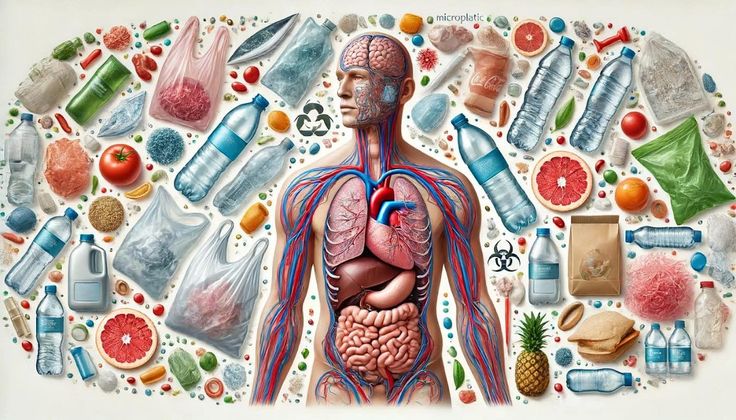
The human body has become a reservoir for the byproducts of modern civilization. Over the past decade, scientific investigations have repeatedly confirmed that microscopic plastic fragments known as microplastics and nanoplastics (MNPs) are no longer confined to the external environment. They have infiltrated the bloodstream, crossed the blood-brain barrier, accumulated in vital organs, and even been transmitted from mothers to developing fetuses. What was once dismissed as an environmental concern has now emerged as an urgent public health emergency.
This article provides a comprehensive examination of the scientific evidence documenting microplastic contamination across human organ systems, the analytical techniques enabling these discoveries, the mechanisms of toxicity, and the broader implications for global health policy.
Understanding Microplastics and Nanoplastics
Before exploring the clinical implications, it is essential to distinguish between the two primary categories of plastic debris found in biological tissues.
A. Microplastics (MPs) refer to plastic particles with diameters ranging from 1 micrometer to 5 millimeters. These particles originate from the fragmentation of larger plastic products such as bottles, packaging materials, and synthetic textiles as well as from intentionally manufactured microbeads used in cosmetics and industrial abrasives.
B. Nanoplastics (NPs) are significantly smaller, measuring less than 1 micrometer in diameter. Due to their diminutive size and elevated surface reactivity, nanoplastics exhibit a greater capacity to traverse critical biological barriers, including the intestinal epithelium, the placental barrier, and the blood-brain barrier. These particles can penetrate cellular membranes and potentially interfere with intracellular processes at the molecular level.
The environmental concentrations of MNPs have increased exponentially over the past fifty years, parallel to the global surge in plastic production. In 2023 alone, 400.3 million metric tons of plastic were manufactured worldwide, reflecting the pervasive role of synthetic polymers in contemporary life. This relentless production ensures that human exposure will continue to rise unless substantial regulatory interventions are implemented.
Detection Methods: How Science Reveals the Invisible
Confirming the presence of plastic particles within human tissue presents formidable analytical challenges. Researchers have developed a sophisticated array of spectroscopic, microscopic, and chromatographic techniques to identify and quantify MNPs in biological samples.
A. Raman Spectroscopy and Fourier-Transform Infrared (FTIR) Spectroscopy represent the most widely employed methods for MNP detection in human tissues. These spectroscopic techniques identify polymers by analyzing their unique vibrational signatures when exposed to laser or infrared light. Raman microscopy excels at particle-specific morphological characterization, while FTIR provides complementary chemical identification capabilities.
B. Pyrolysis Gas Chromatography-Mass Spectrometry (Py-GC/MS) offers quantitative polymer identification by thermally degrading plastic particles and analyzing the resulting chemical fragments. This method has proven particularly valuable for detecting nanoplastics that escape spectroscopic detection due to their sub-micrometer dimensions.
C. Scanning Electron Microscopy with Energy-Dispersive X-ray Spectroscopy (SEM-EDS) enables researchers to visualize particle morphology while simultaneously determining elemental composition, thereby distinguishing plastic particles from inorganic contaminants.
D. Optical Photothermal Infrared (O-PTIR) Spectroscopy represents a recent methodological breakthrough. This label-free, non-destructive technique has been successfully applied to formalin-fixed paraffin-embedded (FFPE) tissue samples the standard format for clinical pathology archives. The method utilizes infrared laser-induced thermal expansion to detect plastic particles as small as 200 nanometers within intact tissue architecture.
E. Matrix-Assisted Laser Desorption/Ionization Time-of-Flight Mass Spectrometry (MALDI-TOF MS) provides additional polymer confirmation capabilities, particularly for identifying synthetic polymer types within complex biological matrices.
Despite these technological advances, the field confronts a significant challenge: methodological heterogeneity across studies limits direct comparison of reported MNP concentrations. A systematic review of 26 eligible studies encompassing 564 human samples revealed reported abundances ranging from less than one to several thousand particles per gram of tissue. This variability underscores the urgent need for internationally harmonized protocols for extraction, quantification, and contamination control.
Organ-Specific Accumulation Patterns
The distribution of MNPs throughout the human body is neither uniform nor random. Research employing advanced spectroscopic imaging has revealed distinct organ-specific accumulation patterns, with certain tissues demonstrating markedly higher contamination levels than others.
The Brain: A Critical Target
Perhaps the most alarming findings concern the human brain. A landmark study published in Nature Medicine analyzed decedent brain tissue collected between 2016 and 2024, confirming the presence of MNPs in the kidney, liver, and brain. Brain tissues harbored higher proportions of polyethylene compared to liver or kidney samples, with electron microscopy verifying that isolated brain MNPs largely present as nanoscale shard-like fragments.
Critically, the study documented a statistically significant increase in MNP concentrations over time in both liver and brain samples (P = 0.01), indicating that environmental contamination is escalating rather than stabilizing. Even more concerning, a cohort of decedent brains with documented dementia diagnoses exhibited greater MNP accumulation, with notable deposition in cerebrovascular walls and immune cells.
Subsequent research has corroborated these findings. A post-mortem investigation analyzing brain, liver, thyroid, kidney, heart, skeletal muscle, and lung tissue identified the thyroid, kidney, and brain as the organs with the highest levels of microplastic contamination, detecting concentrations up to 40.4 particles per gram of wet tissue.
The implications for neurological health are profound. Experimental evidence demonstrates that MNPs can induce cognitive decline, psychiatric symptoms, and neurodegenerative protein aggregation, linking plastic exposure to conditions such as Alzheimer’s and Parkinson’s diseases. Animal models have shown that chronic MNP exposure produces behavioral changes, memory impairment, and neurotransmitter imbalances.
The Cardiovascular System
Microplastic contamination of cardiovascular tissues has emerged as a particularly concerning finding with direct clinical implications. A systematic review and meta-analysis of seven studies examining cardiovascular tissues found MPs in 100% of arterial samples, with polyethylene terephthalate (PET) predominating. Thrombi contained microplastics in 80% of patients, and the pooled prevalence across arteries, veins, and thrombi reached 92%.
The clinical significance of these findings cannot be overstated. Carotid plaques containing MPs were associated with a 4.53-fold increased risk of major cardiovascular events, including myocardial infarction, stroke, or death, over a 34-month follow-up period. This hazard ratio exceeds many traditional cardiovascular risk factors, suggesting that microplastic contamination may represent a previously unrecognized and potentially modifiable contributor to cardiovascular disease.
Mechanistic studies indicate that MNPs induce oxidative stress, inflammation, mitochondrial dysfunction, and cell death in cardiac cells, potentially contributing to myocardial damage and atherosclerotic progression. Cross-sectional analyses have linked microplastic exposure with elevated inflammatory markers, including interleukin-6 (IL-6) and interleukin-12p70 (IL-12p70), as well as alterations in immune cell populations.
The Liver and Kidneys
Hepatic and renal tissues demonstrate substantial MNP accumulation, reflecting their roles in filtration, metabolism, and detoxification. The systematic review of multi-organ deposition patterns identified the liver and kidneys among the most contaminated organs, with concentrations ranging from 58.63 to 61.06 particles per gram in renal and hepatic tissues, respectively.
Nanoplastic characterization in decedent tissues has revealed mean particle lengths of 124.4 nanometers in the kidney and 147.6 nanometers in the liver. These nanoscale dimensions permit translocation across cellular membranes and potential interference with intracellular organelles.
The hepatic implications extend beyond simple accumulation. Research has documented mechanisms of microplastic-induced gastrointestinal injury and liver metabolism disorder, with MNPs triggering oxidative stress, immune disorders, and gut microbiota imbalance that contribute to hepatic pathology.
The Reproductive System
The detection of MNPs in reproductive tissues raises profound concerns regarding fertility and transgenerational health effects. Studies have identified microplastics in human semen, testicular tissue, ovarian follicular fluid, and uterine tube tissue, with concentrations reaching up to 17 particles per gram in semen and 11.60 particles per gram in testicular tissue.
In males, MNP exposure has been associated with testicular damage, impaired spermatogenesis, reduced sperm count and motility, and disruptions in the hypothalamic-pituitary-gonadal axis. Experimental evidence identifies mitochondrial dysfunction-driven oxidative stress and associated inflammation as key mechanisms by which polystyrene microplastics induce spermatogenic failure and hormonal disruption.
The Placenta and Fetal Exposure
Perhaps the most ethically fraught dimension of this crisis involves the transmission of MNPs from mother to child. Microplastics have been detected in human placental tissue at concentrations ranging from 0.28 to 9.55 particles per gram, with polyethylene microplastics identified in all 62 placental samples analyzed in one study.
Critically, MNPs have been identified on both the fetal and maternal sides of the placenta, indicating transplacental transfer and fetal exposure. The presence of these particles during critical windows of fetal development carries potential implications for early-life health outcomes that remain incompletely understood.
Breast milk analysis has revealed mean MNP abundances of approximately 0.52 particles per gram, providing further evidence of maternal transmission during lactation. The detection of MNPs in meconium the first stool of a newborn confirms that fetal exposure occurs in utero.
Mechanisms of Toxicity
The pathophysiological mechanisms through which MNPs exert adverse health effects involve multiple interconnected pathways.
A. Oxidative Stress represents a primary mechanism of MNP toxicity. Plastic particles induce the generation of reactive oxygen species (ROS), overwhelming cellular antioxidant defenses and causing lipid peroxidation, DNA damage, and mitochondrial dysfunction.
B. Inflammatory Response is consistently observed following MNP exposure. Plastic particles trigger pro-inflammatory activation of macrophages and stimulate the secretion of inflammatory cytokines including IL-1β and IL-6. This chronic low-grade inflammation contributes to tissue damage and is implicated in conditions ranging from cardiovascular disease to metabolic disorders.
C. Endocrine Disruption occurs through multiple mechanisms. MNPs contain or adsorb endocrine-disrupting chemicals (EDCs) such as bisphenol-A and phthalate additives. These compounds interfere with hormone receptor signaling, impair energy homeostasis, reproduction, and neurodevelopment. The hypothalamic-pituitary axis appears particularly vulnerable, with plastic-derived pollutants promoting hypothalamic inflammation and disrupting key metabolic pathways.
D. Genotoxicity and Cytotoxicity have been documented in cellular and animal models. MNPs ≤ 1 micrometer are consistently associated with oxidative stress, DNA damage, and increased cytotoxicity, particularly at concentrations of 200 micrograms per milliliter or higher.
E. Microbiome Disruption represents an emerging area of concern. MNP exposure alters gut microbial composition, potentially contributing to gastrointestinal pathology and systemic inflammation through the gut-organ axis.
Sources of Human Exposure
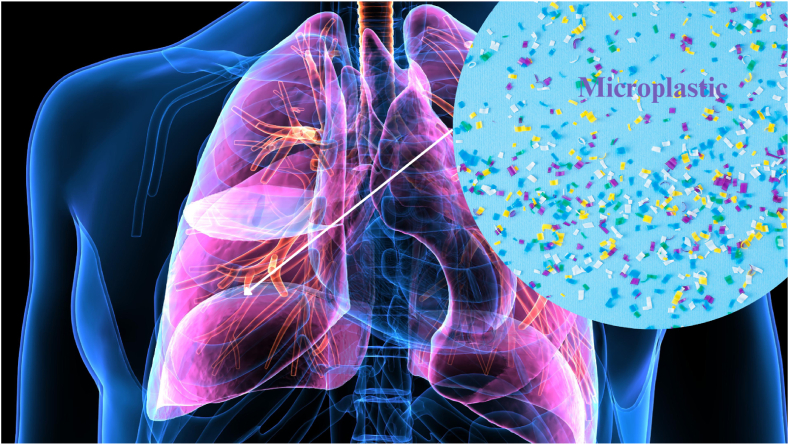
Understanding the routes through which MNPs enter the human body is essential for developing effective mitigation strategies.
A. Ingestion constitutes the most significant exposure pathway. Adults may ingest approximately 50,000 plastic particles annually through food and water, while children may consume around 8,000 particles. Bottled water, salt, and seafood represent primary dietary sources. Alarmingly, bottle-fed infants may ingest up to 1.5 million microplastic particles annually from formula prepared in polypropylene bottles.
B. Inhalation represents the second most significant exposure route. Indoor and outdoor air contains suspended plastic fibers and fragments that are inhaled into the respiratory system. Bronchoalveolar lavage fluid analysis has confirmed the presence of microplastics in the human respiratory tract.
C. Dermal Contact plays a lesser but non-negligible role. Microplastic particles from personal care products and synthetic textiles can penetrate compromised skin barriers, though intact skin provides substantial protection.
D. Medical Procedures introduce additional exposure risks through plastic medical devices, intravenous tubing, and implanted materials.
Health Implications and Disease Associations
The accumulating evidence linking MNP exposure to specific disease states continues to strengthen. Cardiovascular disease represents the most well-established association, with carotid plaque MNP content predicting a 4.5-fold increased risk of major adverse cardiac events.
Neurodegenerative conditions, including Alzheimer’s disease and Parkinson’s disease, have been linked to MNP accumulation in brain tissue. The association of microplastics in human cerebrospinal fluid with Alzheimer’s disease-related changes has been documented, though causality remains to be established.
Metabolic disorders, including diabetes and obesity, may be exacerbated by MNP-induced endocrine disruption and chronic inflammation. Research has shown that MNPs can alter the function of key endocrine organs, including pancreatic islet cells, potentially worsening metabolic disease.
Reproductive dysfunction represents another significant concern. The detection of MNPs in reproductive tissues and their association with impaired spermatogenesis, reduced sperm quality, and hormonal disruption suggests a potential role in declining fertility rates observed in many industrialized nations.
Conclusion: A Call for Urgent Action

The detection of microplastics and nanoplastics in human organs represents a defining public health challenge of the twenty-first century. The scientific evidence is unequivocal: plastic particles have infiltrated every major organ system, cross biological barriers previously considered impenetrable, and accumulate at concentrations that increase with each passing year.
The methodological challenges that currently limit cross-study comparability must be addressed through internationally harmonized protocols for MNP detection, quantification, and reporting. Without standardized approaches, our understanding of true human tissue burdens and their clinical significance will remain incomplete.
Simultaneously, regulatory frameworks must evolve to recognize MNPs as environmental contaminants with documented human health implications. Reducing plastic production, improving waste management infrastructure, and developing biodegradable alternatives represent essential components of any comprehensive mitigation strategy.
For individuals, practical steps to reduce exposure include avoiding plastic food containers for hot foods, minimizing consumption of bottled water, choosing natural fiber clothing, and supporting policies that restrict single-use plastics.
The human body has become a plastic repository a consequence of unchecked synthetic polymer production and disposal. Reversing this contamination will require sustained scientific investigation, robust regulatory action, and fundamental changes in how society produces, consumes, and disposes of plastic materials. The health of current and future generations depends on our collective response to this invisible invasion.