For decades, addiction medicine has operated with a fragmented arsenal. A nicotine patch helps with smoking but does nothing for alcohol. Methadone manages opioid dependence but offers no relief for cocaine cravings. There has never been a single medication capable of addressing the core compulsive drive that fuels all substance use disorders until now. A landmark 2026 study published in The BMJ has revealed that GLP-1 receptor agonists, the same class of medications that revolutionized diabetes and obesity treatment, may represent a universal key to unlocking addiction’s grip on the brain. This discovery, alongside a wave of clinical trials targeting alcohol, nicotine, opioids, and stimulants, marks what many researchers are calling the most significant breakthrough in addiction science in a generation.
The Science Behind the Breakthrough
A Common Biological Pathway
The human brain’s reward system evolved to reinforce survival behaviors eating, social bonding, reproduction. Drugs of abuse hijack this system, flooding it with dopamine and creating powerful associations that drive compulsive use. For years, scientists suspected that a shared neural mechanism might underlie all addictions, but no medication had been shown to act upon it across the board. GLP-1 medications appear to do exactly that.
GLP-1 receptors are not confined to the pancreas and gut, where they regulate insulin and satiety. They are also expressed in brain regions critical for reward processing, including the ventral tegmental area (VTA) and nucleus accumbens. When activated by medications like semaglutide, liraglutide, or tirzepatide, these receptors appear to modulate dopamine signaling in a way that blunts the motivational pull of addictive substances without eliminating the capacity for natural reward. In animal models, GLP-1 receptor agonists consistently reduce drug intake and relapse-like behaviors across alcohol, nicotine, opioids, and psychostimulants.
Dr. Ziyad Al-Aly of Washington University School of Medicine, senior author of the landmark BMJ study, explained the revelation succinctly: “The revelation about GLP-1 medication is that it really works against all major substances, and it works uniformly, not because it acts against alcohol or opioids or nicotine specifically, but because it is likely acting against the craving itself. It blunts that craving that pulls people toward whatever they’re addicted to”.
From Anecdote to Evidence
The journey from clinical observation to rigorous evidence began with patient reports. Individuals taking GLP-1 medications for diabetes or weight loss began telling their physicians that their desire for alcohol, cigarettes, and even compulsive behaviors had dramatically diminished. These anecdotes, initially dismissed as incidental, gained traction when observational studies linked GLP-1 treatment to lower rates of alcohol-related hospitalization, opioid overdose, and cannabis use disorder diagnoses.
What was missing was a comprehensive, population-level analysis examining all substances simultaneously. The WashU Medicine team filled that gap by analyzing the electronic health records of 606,434 U.S. veterans with type 2 diabetes, a population with both high rates of substance use and detailed longitudinal health data.
The Landmark BMJ Study: Findings That Change Everything
Study Design and Population
The WashU Medicine researchers divided participants into two cohorts: 524,817 veterans without a pre-existing substance use disorder and 81,617 with an existing diagnosis. They compared outcomes between those prescribed a GLP-1 receptor agonist (most commonly semaglutide, liraglutide, or dulaglutide) and those prescribed an SGLT2 inhibitor, a different class of diabetes medication with no known effect on reward pathways. This comparison design was crucial, as it controlled for the metabolic improvements associated with GLP-1 use, isolating the medication’s specific effects on addiction.
Prevention: Reduced Risk of Developing Addiction
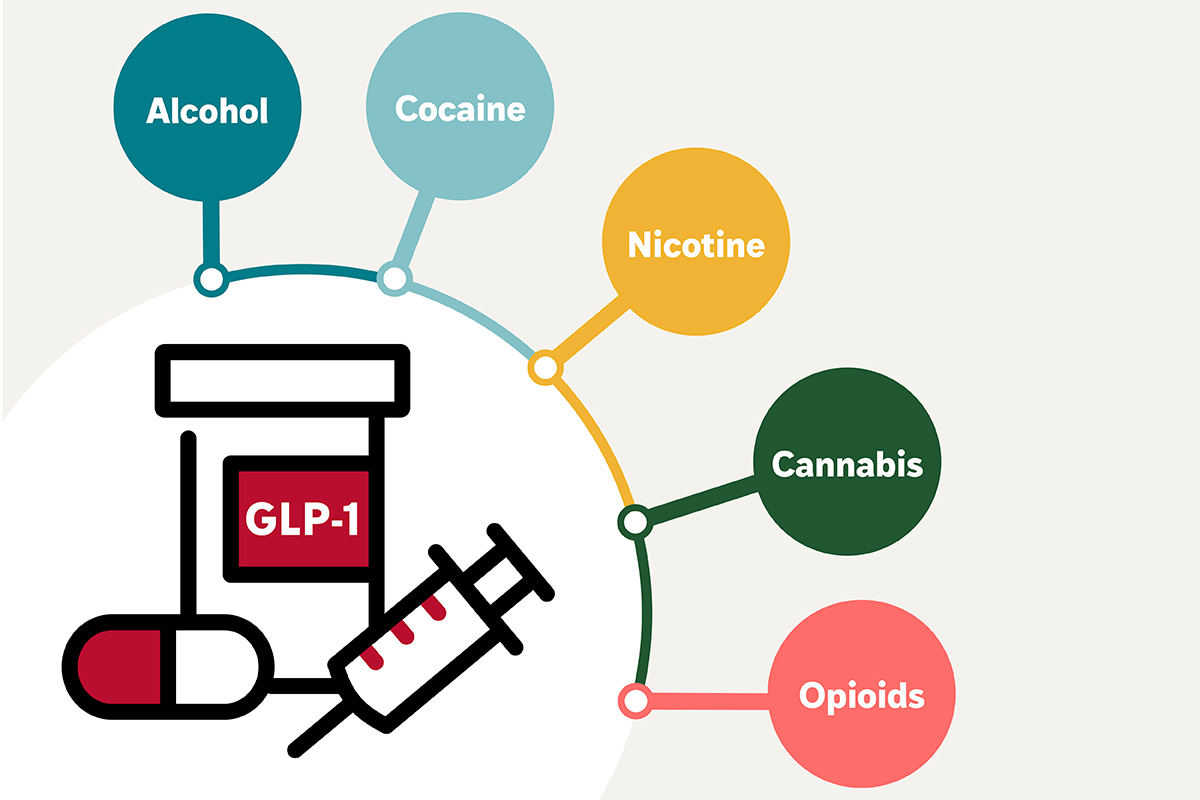
Among veterans without pre-existing substance use disorders, GLP-1 treatment was associated with significantly reduced risk of developing addiction to every substance category studied:
-
Alcohol use disorder: 18% risk reduction
-
Cannabis use disorder: 14% risk reduction
-
Cocaine use disorder: 20% risk reduction
-
Nicotine dependence: 20% risk reduction
-
Opioid use disorder: 25% risk reduction
These findings, reported by multiple outlets covering the study, suggest that GLP-1 medications may have a protective effect, potentially preventing the transition from casual use to compulsive disorder in vulnerable individuals.
Treatment: Reduced Harms in Existing Addiction
For veterans who already had a substance use disorder, GLP-1 treatment was associated with reduced risk of severe outcomes, including overdose and drug-related death. This harm-reduction effect is particularly significant because it suggests that even in established addiction, GLP-1s can attenuate the lethal consequences of compulsive use a finding with profound implications for public health.
A Universal Mechanism
The uniformity of the effect across substances is what makes this study extraordinary. Previous addiction medications were substance-specific: naltrexone for alcohol and opioids, bupropion for nicotine, methadone for opioids. GLP-1s appear to target the shared substrate of addiction the craving itself rather than the pharmacological properties of any single drug.
Clinical Trials: From Observation to Intervention
Alcohol Use Disorder: The Strongest Evidence
The most robust clinical evidence for GLP-1s in addiction comes from alcohol use disorder (AUD). A 26-week, randomized, double-blind, placebo-controlled trial published in The Lancet in May 2026 enrolled 108 treatment-seeking patients with moderate to severe AUD and comorbid obesity. Participants received either once-weekly semaglutide (2.4 mg) or placebo, alongside standard cognitive behavioral therapy.
The results were striking. Participants receiving semaglutide experienced a 41.1% reduction in heavy drinking days, compared to 26.4% in the placebo group—an estimated treatment difference of 13.7 percentage points (p=0.0015). Biomarker measurements of blood alcohol supported the self-reported drinking data. The number needed to treat (NNT) for semaglutide was 4.3, meaning only four patients needed to receive the medication for one to experience a meaningful reduction in heavy drinking. By comparison, approved AUD medications have NNTs of 7 or higher.
Dr. George Koob, Director of the National Institute on Alcohol Abuse and Alcoholism, commented: “Very few medications are currently approved for alcohol use disorder, and these are vastly underutilized. A new option that is more accessible and more effective could be a gamechanger for closing the treatment gap”.
Nicotine Dependence: Cravings and Beyond
A phase 2a randomized clinical trial published in JAMA Network Open examined semaglutide’s effects in adults with daily cigarette use who were not actively seeking treatment. While semaglutide monotherapy did not significantly improve laboratory smoking reinstatement or reduce weekly cigarettes per day, it led to greater reductions in laboratory cigarette intake and reduced weekly nicotine craving. Exploratory analyses suggested possible increases in readiness to quit smoking and self-efficacy for resisting cigarettes.
The researchers noted that GLP-1’s ability to reduce nicotine craving while simultaneously preventing post-cessation weight gain a major barrier to quitting for many smokers makes these medications uniquely suited for smoking cessation. Further trials are underway to determine whether these early signals translate into improved cessation rates.
Opioid Use Disorder: A New Hope
Opioid use disorder (OUD) remains one of the most lethal addictions, with overdose rates continuing to rise globally. A randomized, double-blind, placebo-controlled clinical trial protocol has been published for evaluating semaglutide in outpatient populations with OUD. Observational studies have already suggested that GLP-1 receptor agonists decrease craving measures in residential OUD populations.
The potential for GLP-1s in OUD is particularly significant because of the 25% risk reduction for developing opioid use disorder observed in the BMJ study. If clinical trials confirm these preventive effects, GLP-1s could become a cornerstone of overdose prevention strategies.
Stimulant Use Disorders: Filling a Treatment Void
For methamphetamine and cocaine use disorders, no FDA-approved medications exist. This therapeutic void has been particularly devastating, as stimulant overdose deaths have surged in recent years. Researchers at UT Southwestern Medical Center have launched a pilot study using tirzepatide a dual GLP-1/GIP agonist for methamphetamine, cocaine, and prescription stimulant use disorders.
Dr. Manish Jha, who leads the trial, explained the rationale: “We were running several clinical trials for methamphetamine use disorder, and we just weren’t seeing the breakthroughs we needed. After attending the presentation by Dr. Christian Hendershot on semaglutide for alcohol use disorder, I wanted to research these medications as a potential option”.
The study chose tirzepatide because its dual mechanism targets two metabolic pathways, potentially offering broader therapeutic benefit than single GLP-1 agonists. Demand for the trial exceeded expectations, with participant response requiring the enrollment cap to be raised from 30 to 45.
A separate trial is evaluating semaglutide in combination with cognitive behavioral therapy for cocaine use disorder, targeting three central reward-related mechanisms underlying cocaine use.
Mechanisms of Action: How GLP-1s Quiet the Addicted Brain
Dopamine Modulation
The precise mechanisms by which GLP-1 receptor agonists reduce addictive behaviors are still being elucidated, but several pathways appear involved. The most prominent hypothesis centers on dopamine modulation. GLP-1 receptors are expressed on GABAergic neurons in the VTA that project to dopamine neurons. Activation of these receptors increases GABAergic inhibition of dopamine neurons, effectively dampening the phasic dopamine release that encodes drug reward and reinforcement.
A study published in Science demonstrated that systemic administration of exendin-4, a GLP-1 receptor agonist, attenuated cocaine seeking by increasing VTA GABA neuron activity and decreasing VTA dopamine neuron activity. This mechanism explains why GLP-1s reduce drug-seeking across multiple substance classes: they act on the final common pathway of reward.
Craving Reduction
Beyond dopamine, GLP-1s appear to influence craving through effects on interoceptive and motivational systems. The insula, a brain region involved in conscious awareness of bodily states and drug craving, expresses GLP-1 receptors. By modulating insular activity, GLP-1s may reduce the conscious experience of craving that drives drug-seeking behavior.
Metabolic and Inflammatory Effects
GLP-1s also exert metabolic and anti-inflammatory effects that may indirectly benefit addiction outcomes. Chronic substance use is associated with neuroinflammation, insulin resistance, and metabolic dysregulation, all of which can exacerbate addiction severity. By improving metabolic health, GLP-1s may create a physiological environment less conducive to compulsive use.
The Mental Health Context
Safety Concerns and Reassurance
Early pharmacovigilance signals raised concerns that GLP-1s might increase risk of depression, suicidal ideation, or other psychiatric adverse events. A comprehensive review published in JAMA Psychiatry in January 2026 examined this issue and concluded that “despite some early pharmacovigilance alarms, GLP-1RAs do not seem to cause or increase the risk of psychopathology”. Moreover, some recent studies suggest beneficial effects of GLP-1RAs on mental health outcomes, though more research is needed.
Dual Diagnosis Considerations
Individuals with substance use disorders frequently have co-occurring mental health conditions, including depression, anxiety, and post-traumatic stress disorder. The potential for GLP-1s to simultaneously address addiction and improve mood regulation could make them uniquely valuable in dual diagnosis treatment. However, the JAMA Psychiatry review cautioned that questions remain about “the specifics of treatment with GLP-1 therapies in the context of addiction (eg, dose, duration, tachyphylaxis, impact of discontinuation), individual differences and potential predictors of response, mechanisms of action, intersection with mental health and medical comorbidities, cost, and fair access”.
Current Status: Off-Label Use and the Regulatory Landscape
No FDA Approval for Addiction
As of 2026, no GLP-1 medication is FDA-approved for the treatment of any substance use disorder. Approved indications for the drug class include type 2 diabetes, obesity or overweight, heart disease, and kidney disease. Any use for addiction treatment is off-label, meaning clinicians may prescribe GLP-1s for addiction only if the patient also meets criteria for an approved indication.
This regulatory limitation creates a practical dilemma. Many individuals with substance use disorders do not meet obesity thresholds, leaving them without access to GLP-1 prescriptions unless they pay out-of-pocket or enroll in clinical trials. As Dr. Jha’s experience at UT Southwestern demonstrated, recruitment for addiction trials is complicated by the requirement that participants concurrently meet FDA-labeled weight criteria.
The Gray Area of Clinical Practice
Despite the lack of FDA approval, some addiction treatment centers and telehealth platforms have begun offering GLP-1s as part of comprehensive recovery programs. A January 2026 systematic review identified 33 active GLP-1 trials registered for substance use disorders, reflecting both scientific interest and patient demand. Telehealth company Quel Health launched a dedicated GLP-1 addiction program in September 2026, signaling that market forces are moving faster than regulatory approval.
Pharmacists are also stepping into a key role, navigating the complex landscape of off-label prescribing, prior authorizations, and patient counseling. As one commentary noted, “we are in this gray area where we’re often prescribing them for a metabolic issue, either obesity or diabetes”.
Challenges and Open Questions
A. Optimal Dosing and Treatment Duration
The appropriate dose of GLP-1s for addiction treatment remains unknown. Addiction trials have used doses ranging from 0.5 mg to 2.4 mg of semaglutide, with little data on whether higher doses produce better outcomes or whether lower doses might suffice. Treatment duration is equally uncertain: should GLP-1s be used indefinitely for addiction, or is a defined course sufficient to produce lasting changes in reward circuitry? The JAMA Psychiatry review highlighted “tachyphylaxis” the possibility that tolerance to GLP-1’s effects develops over time as a critical unanswered question.
B. Individual Predictors of Response
Not all patients respond to GLP-1s. In the Lancet AUD trial, some participants experienced dramatic reductions in heavy drinking, while others showed little change. Identifying predictors of response whether genetic, neuroimaging-based, or clinical will be essential for personalizing treatment and avoiding futile trials of an expensive medication. The JAMA Psychiatry review identified “individual differences and potential predictors of response” as a priority for future research.
C. Cost and Access
GLP-1 medications are expensive, with monthly costs exceeding $1,000 in the United States without insurance coverage. For addiction treatment a field already under-resourced relative to its disease burden the cost of GLP-1s poses a significant barrier. The JAMA Psychiatry review called for research into “cost, and fair access to these treatments”. Without policy interventions, GLP-1 addiction treatment could exacerbate health disparities, benefiting only those with the means to pay.
D. Long-Term Safety in Addiction Populations
While GLP-1s have a well-characterized safety profile in diabetes and obesity, long-term safety in addiction populations who may have liver disease, malnutrition, or other comorbidities requires dedicated study. The gastrointestinal side effects observed in trials were transient and mild, but longer-term risks remain unknown.
E. The Placebo Problem
Addiction trials are notoriously susceptible to placebo effects, particularly for subjective outcomes like craving. The Lancet AUD trial used rigorous methodology, including biomarker confirmation of self-reported drinking, but many ongoing trials rely primarily on self-report. The JAMA Psychiatry review emphasized the need for randomized controlled trials with objective endpoints to definitively establish efficacy.
The Future: What Comes Next
Ongoing and Upcoming Trials
At least 33 clinical trials are currently investigating GLP-1s for substance use disorders, targeting alcohol, nicotine, opioids, cocaine, methamphetamine, and cannabis. Several of these are phase 3 trials that, if positive, could support FDA approval for addiction indications. However, the Medical Daily reported that “the trials that could change that do not report until 2027,” meaning the regulatory landscape is unlikely to shift before then.
Beyond GLP-1: Next-Generation Medications
The success of GLP-1s in addiction has spurred interest in other incretin-based therapies. Tirzepatide, a dual GLP-1/GIP agonist, is being studied for stimulant use disorders. Triple agonists targeting GLP-1, GIP, and glucagon receptors are in development for obesity and may have even broader applications. Additionally, researchers are exploring whether GLP-1s can be combined with existing addiction medications such as naltrexone or bupropion to produce synergistic effects.
The Prevention Paradigm
Perhaps the most revolutionary implication of the BMJ study is the possibility of prevention. If GLP-1s can reduce the risk of developing addiction in the first place, they could be prescribed to individuals with risk factors family history, trauma exposure, or early substance use before addiction takes hold. This would represent a fundamental shift from treatment to prevention, analogous to the use of statins for cardiovascular disease.
Dr. Al-Aly’s team is already thinking in these terms. The finding that GLP-1s reduced the risk of developing all substance use disorders studied, with risk reductions ranging from 14% to 25%, suggests that these medications may confer broad protection against addiction’s emergence. If replicated in prospective trials, this could transform addiction medicine from a reactive discipline to a preventive one.
Conclusion

The GLP-1 addiction treatment breakthrough represents a convergence of serendipity, rigorous science, and clinical need. What began as patient anecdotes about reduced alcohol interest during weight loss treatment has evolved into a robust body of evidence spanning preclinical models, observational cohorts, and randomized controlled trials. The BMJ study’s finding of uniform efficacy across all major substances is unprecedented in addiction medicine, where treatments have historically been substance-specific and only partially effective.
The road ahead is not without obstacles. Regulatory approval, cost barriers, long-term safety, and unanswered questions about dosing and patient selection all must be addressed. But for the first time, the field has a mechanism-based, broadly effective intervention that targets the core pathology of addiction the craving itself. As Dr. Nora Volkow, Director of the National Institute on Drug Abuse, observed: “We’re beginning to see some of that potential for GLP-1s to treat drug addiction turn into reality. Questions remain but this is nonetheless very encouraging”.
For the millions of individuals and families affected by addiction, this breakthrough offers something that has been in short supply: genuine hope.