
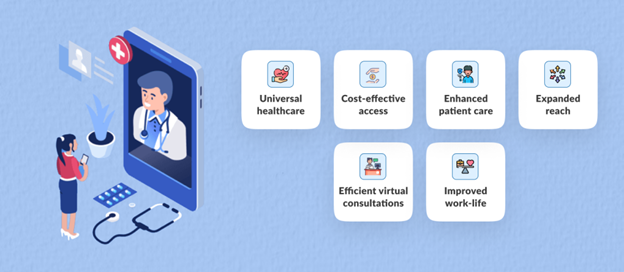
The history of medicine is a relentless pursuit of better outcomes and broader access. From the first sterile surgical environments to the advent of antibiotics, every major leap has been technological. Today, we are witnessing a paradigm shift driven not by pharmacology or surgical tools, but by information and communication technology (ICT): the ascendancy of telemedicine. This is not merely a transient trend; it is the fundamental re-engineering of healthcare delivery, transitioning from a clinic-centric model to a patient-centric, location-agnostic system. Accelerated by global events, telemedicine has evolved from a niche capability primarily used in remote areas to an indispensable component of mainstream medical practice, creating vast opportunities for efficiency, specialization, and, critically, improved AdSense-driving traffic through high-value content.
This comprehensive exploration will dissect the technological foundations, regulatory catalysts, profound benefits, and the persistent challenges that define the current and future landscape of virtual care, ensuring an article of substantial depth and SEO value.
I. Defining the Scope of Telemedicine
Before delving into the technical details and market impact, it is crucial to establish clear definitions, as “telemedicine” is often used interchangeably with “telehealth,” though distinctions exist.
A. Telemedicine vs. Telehealth: A Critical Distinction
-
Telehealth: This is the broader term. It encompasses all uses of technology to promote health and well-being. This includes clinical services (telemedicine), non-clinical services (like provider training, administrative meetings, and continuing medical education), and public health initiatives (like large-scale remote disease monitoring).
-
Telemedicine: This refers specifically to the remote clinical services provided by physicians and other licensed healthcare professionals. This involves diagnosing, treating, monitoring, and advising patients using telecommunications technology.
B. The Three Core Modes of Clinical Service Delivery
Telemedicine services are broadly categorized into three distinct technical mechanisms, each suited for different clinical scenarios:
A. Synchronous (Real-Time) Care: This is the most recognized form, involving live, two-way interaction.
* Mechanism: Video-conferencing (e.g., platforms like Zoom for Healthcare, proprietary Electronic Health Record portals) or telephone calls.
* Use Case: Virtual primary care visits, follow-up appointments, mental health counseling, specialist consultations.
B. Asynchronous (Store-and-Forward) Care: This involves transmitting recorded health information, such as X-rays, photos, or video clips, from a patient or primary care provider to a specialist for later review.
* Mechanism: Secure transmission of digital files.
* Use Case: Dermatology (sending high-resolution images of skin lesions), ophthalmology (transmitting retinal scans), and teleradiology (sending MRI or CT scans for expert interpretation).
C. Remote Patient Monitoring (RPM): This mode uses digital technology to collect medical and other forms of health data from individuals in one location and electronically transmit that information to healthcare providers in a different location for review.
* Mechanism: Wearable devices (smartwatches, patches), Internet of Things (IoT) medical devices (connected glucometers, blood pressure cuffs, continuous glucose monitors), and specialized home health sensors.
* Use Case: Managing chronic conditions like diabetes, hypertension, congestive heart failure (CHF), and post-operative recovery.
II. The Catalyst: Global Accelerators and Regulatory Shifts
While telemedicine has been technologically viable for decades (originating in NASA missions), its adoption was historically slow, hampered by restrictive reimbursement policies and complex licensing laws. The inflection point was a combination of technological maturation and urgent external pressure.
A. The Pivotal Role of the COVID-19 Pandemic
The global public health crisis served as the single greatest accelerator for telemedicine adoption. The imperative to minimize in-person contact to conserve personal protective equipment (PPE) and reduce infection risk for both patients and providers necessitated an immediate, massive pivot to virtual care.
-
Emergency Regulatory Waivers: To facilitate this shift, governments and payers (insurance companies) rapidly instituted temporary measures.
-
Licensure Flexibility: State and national boards temporarily eased restrictions, allowing physicians to practice across state lines—a regulatory hurdle that had previously stymied national-scale telemedicine.
-
Payment Parity: This was the most crucial change. Payers agreed to reimburse virtual visits at the same rate as in-person visits. This eliminated the financial disincentive for providers to switch to telemedicine, instantly making it economically viable.
-
-
Technological Democratization: Increased public familiarity with video conferencing tools (like Zoom and Microsoft Teams) lowered the technical barrier to entry for patients and providers alike, making the transition seamless for a majority of the population.
B. The Underlying Technological Evolution
The pandemic merely leveraged pre-existing technological advancements that made high-quality virtual care possible:
A. Ubiquitous High-Speed Internet: The expansion of fiber and 5G networks provides the bandwidth necessary for reliable, high-definition video consultations. Lag and dropped calls were once common barriers; now, they are rare exceptions.
B. Smartphone and Tablet Penetration: With the majority of the global population possessing a camera-equipped smart device, the “endpoint” for a virtual visit is already in the patient’s hand, eliminating the need for specialized, expensive hardware.
C. Advancements in IoT and Wearables: The miniaturization and accuracy of biosensors have transformed RPM. Devices can now reliably track vital signs ($HR, SpO2, EKG$) and activity, offering physicians a constant stream of longitudinal data far superior to a single, static reading taken in a clinic.
III. The Compelling Advantages Driving Telemedicine’s Permanence
The benefits of telemedicine extend far beyond convenience, fundamentally improving accessibility, efficiency, and cost management for all stakeholders in the healthcare ecosystem.
A. Enhanced Patient Access and Equity
-
Overcoming Geographical Barriers: For patients in rural areas, traveling to a specialist can involve hours of driving, missed work, and travel costs. Telemedicine instantly collapses this distance, providing city-level specialist care to underserved populations.
-
Mobility and Frailty Management: For elderly patients or those with chronic conditions that limit mobility, a trip to the doctor is a significant logistical and physical burden. Virtual care allows them to receive treatment comfortably and safely at home.
-
Reduced Wait Times: Simple consultations (e.g., medication refills, review of lab results) can be handled quickly via asynchronous communication or rapid synchronous visits, drastically shortening the queue for in-person appointments required for complex or physical examinations.
B. Operational Efficiencies for Providers
A. Optimized Clinic Flow: Telemedicine frees up physical exam rooms and reduces the need for large waiting areas. Staff can manage a higher volume of patient visits because administrative time (check-in, rooming, check-out) is significantly reduced.
B. Reduced Overhead Costs: For private practices, a higher percentage of virtual visits can translate to smaller office space requirements, less utility consumption, and lower front-office staffing needs.
C. Burnout Reduction: By offering physicians greater flexibility, allowing some administrative and light clinical work to be done remotely, telemedicine can contribute to a healthier work-life balance and combat clinical burnout.
C. Economic and Financial Benefits (The AdSense Angle)
-
Cost Savings for Patients: Patients save money by eliminating or reducing costs associated with travel, fuel, parking, and lost wages from taking a full day off work for a short appointment.
-
Improved Chronic Disease Management: RPM allows for proactive interventions based on real-time data. Catching a blood pressure spike or blood glucose crash early prevents costly, avoidable emergency room visits and hospital readmissions. This “value-based care” approach is highly profitable for systems focused on outcomes, creating excellent content opportunities around cost-saving healthcare tips and insurance-covered devices.
-
Market Expansion: For niche specialists, telemedicine allows them to serve a national (or even global, where regulations allow) market, leading to increased patient volume and revenue streams, which fuels high-value advertising related to medical devices and platforms.
IV. The Persistent and Evolving Challenges in Telemedicine
Despite its exponential growth, telemedicine is not without significant hurdles that must be addressed for its sustainable, equitable future. These challenges represent fertile ground for problem-solving, thought leadership, and high-engagement content.
A. Regulatory and Licensure Complexity
-
Interstate Licensing: The post-pandemic retraction of emergency waivers has re-established strict state-by-state licensing laws. A physician licensed in Texas generally cannot treat a patient sitting in California, severely limiting the scalability of national telemedicine platforms. Legislative efforts (such as the Interstate Medical Licensure Compact) are ongoing but slow.
-
Prescribing Regulations: Rules regarding prescribing controlled substances, particularly without a prior in-person visit, are highly regulated and vary significantly by state and federal law, creating compliance complexity for providers.
B. The Digital Divide and Access Inequity

A. Broadband Access: Telemedicine relies on reliable internet. Communities that lack adequate broadband infrastructure (often rural or lower-income urban areas) are excluded from high-quality video visits. This technological barrier exacerbates existing healthcare disparities.
B. Digital Literacy: Older adults or individuals with limited exposure to technology may struggle to download apps, manage camera settings, or troubleshoot connectivity issues, reducing the effectiveness and adoption rate of virtual care among critical demographic segments.
C. Technological and Clinical Limitations
-
Lack of Physical Exam: While visual inspection is possible, the core limitation remains the inability to perform a physical touch exam (palpation, auscultation, percussion). This makes telemedicine unsuitable for acute physical trauma, complex musculoskeletal issues, and conditions requiring immediate manual verification.
-
Data Security and Privacy (HIPAA/GDPR): The transmission and storage of sensitive patient data across multiple networks and devices introduce significant security risks. Platforms must meet stringent national and international data privacy regulations (like HIPAA in the U.S.)—a compliance topic that drives substantial B2B content traffic.
-
Diagnostic Tools: The need for at-home diagnostic tools is critical. While some devices exist, widespread, affordable home lab testing and diagnostic imaging integration is still developing.
V. The Future Trajectory: Innovations and Integration
Telemedicine is a stepping stone to a fully integrated, digitized healthcare system. The next wave of innovation will focus on embedding virtual tools into everyday life and perfecting the remote examination.
A. The Next Generation of Tele-Diagnosis
-
AI-Driven Diagnostics: Artificial intelligence is being integrated to analyze asynchronous data. For example, AI can review submitted photos of skin lesions (teledermatology) or radiological scans (teleradiology), flag concerning findings, and assist the physician in diagnosis, increasing accuracy and speed.
-
Tele-Auscultation: Devices like electronic stethoscopes and otoscopes are being adapted for home use, allowing a physician miles away to remotely listen to a patient’s heart, lungs, and ear canals in real-time. This begins to solve the “no physical exam” problem.
-
Virtual Reality (VR) and Augmented Reality (AR): VR is finding use in remote physical therapy, providing immersive environments for guided rehabilitation exercises. AR can overlay clinical data onto a patient’s body for a remote clinician, enhancing the diagnostic experience.
B. Hybrid Care Models
The future is not purely virtual, but hybrid. The most effective model of care will strategically combine the best of both worlds:
A. “Hospital at Home” Programs: Using RPM technology and periodic in-person nursing visits, hospitals are now managing complex, acute conditions (like heart failure exacerbations) in the patient’s home, reducing costs and infection risks while improving patient satisfaction.
B. Periodic Wellness Visits: Patients may alternate between an in-person annual physical (for bloodwork and full physical exam) and several virtual follow-up and chronic condition management visits per year.
C. Pharmacist and Dietitian Integration: Tele-consultations are expanding to include non-physician specialists, embedding lifestyle and nutritional advice directly into the patient’s home, driving more holistic health outcomes.
Conclusion: A Permanent Shift
The rise of telemedicine is indisputable. What began as a crisis measure has proven its enduring value by fundamentally improving access, reducing costs, and streamlining provider operations. As regulatory bodies continue to adapt and technology addresses the remaining limitations, particularly the digital divide and the need for remote physical examination tools, virtual care will become less of a separate service and more of an invisible layer seamlessly integrated into all facets of healthcare.
For publishers, the transition to digital healthcare offers a durable, high-value content niche. The topics of security, regulatory compliance, new technology (AI/IoT), and patient-centered cost savings are evergreen, drawing a professional, high-intent audience that is highly receptive to targeted advertising. The digital revolution in healthcare is not slowing down—it is accelerating, and the platforms that provide comprehensive, authoritative content on this change are poised for sustained success.