

Mindful Eating: Your Path to a Longer, Healthier Life
In a world defined by its relentless pace, where convenience often dictates our choices, the act of eating has largely devolved into a hurried, distraction-filled chore. We consume meals while staring at screens, driving, or working, divorcing ourselves from the very process that sustains us. This habit of “mindless eating” is not just a modern faux pas; it is a fundamental disruption of the delicate connection between the body and the brain, a disconnect that silently yet significantly erodes our health and vitality.
However, a profound counter-movement is gaining global traction: mindful eating. Far from being a restrictive diet or a fleeting health fad, mindful eating is a timeless, holistic approach that integrates the philosophical principles of mindfulness—bringing complete, non-judgmental awareness to the present moment—into the daily experience of food. By consciously engaging all our senses, acknowledging our body’s signals, and recognizing the emotional and environmental context of our meals, we can fundamentally transform our relationship with food. This transformation, in turn, unlocks a cascade of benefits, from enhanced digestion and effective weight management to a powerful reduction in stress, ultimately setting a sustainable foundation for longevity and a vibrant, health-span extension.
This comprehensive guide will delve deep into the core tenets of mindful eating, explore its profound scientific links to extended health and well-being, and provide an actionable, step-by-step framework to seamlessly integrate this life-altering practice into your daily routine. Prepare to discover the secret to a longer, healthier life, one intentional bite at a time.
The Essence of Mindful Eating
Mindful eating is the application of mindfulness to the consumption of food. It’s an invitation to step off the autopilot and fully inhabit the experience of eating. The practice is anchored in cultivating a heightened awareness of several interconnected factors:
A. Sensory Awareness
This is perhaps the most immediate aspect of mindful eating. It involves deliberately slowing down and using all five senses to fully appreciate the food before you.
- Sight: Noticing the colors, shapes, and presentation of the meal.
- Smell: Inhaling the aromas, as scent is intimately linked to taste perception and memory.
- Touch/Texture: Feeling the food’s consistency—the crispness of a vegetable, the smoothness of a sauce—in your mouth.
- Sound: Listening to the subtle sounds of eating, such as the crunching of a bite or the gentle clinking of cutlery.
- Taste: Isolating and savoring the complex spectrum of flavors in each component of the dish.
B. Internal Body Cues
A core function of mindful eating is the re-establishment of communication between the mind and the body regarding genuine physiological needs.
- Hunger and Satiety: Learning to distinguish between true physical hunger (a biological need for fuel) and non-hunger triggers (such as boredom, stress, or emotional craving). It involves starting to eat when you feel moderate hunger and, crucially, stopping when you are comfortably satisfied, typically around 80% full, rather than completely stuffed.
- Physical Sensations: Paying attention to how different foods make the body feel both immediately and hours later. Does a certain food cause bloating, a boost of energy, or a rapid crash?
C. Psychological and Emotional Awareness
Mindful eating shines a light on the mental landscape surrounding your food choices.
- Thoughts and Judgments: Observing the mental chatter and self-criticism (e.g., “This is a ‘bad’ food,” “I shouldn’t be eating this”) without judging the thoughts themselves. The goal is to observe and accept these thoughts, letting them pass without dictating your behavior.
- Emotional Triggers: Recognizing the emotions that precede an urge to eat (e.g., stress, sadness, anxiety, joy) and learning to address the underlying emotion with an appropriate, non-food response.
In essence, mindful eating is a shift from eating on “auto-pilot” to eating with intention and attention. It’s about the how, why, and when of eating, not just the what.
The Profound Link Between Mindful Eating and Longevity
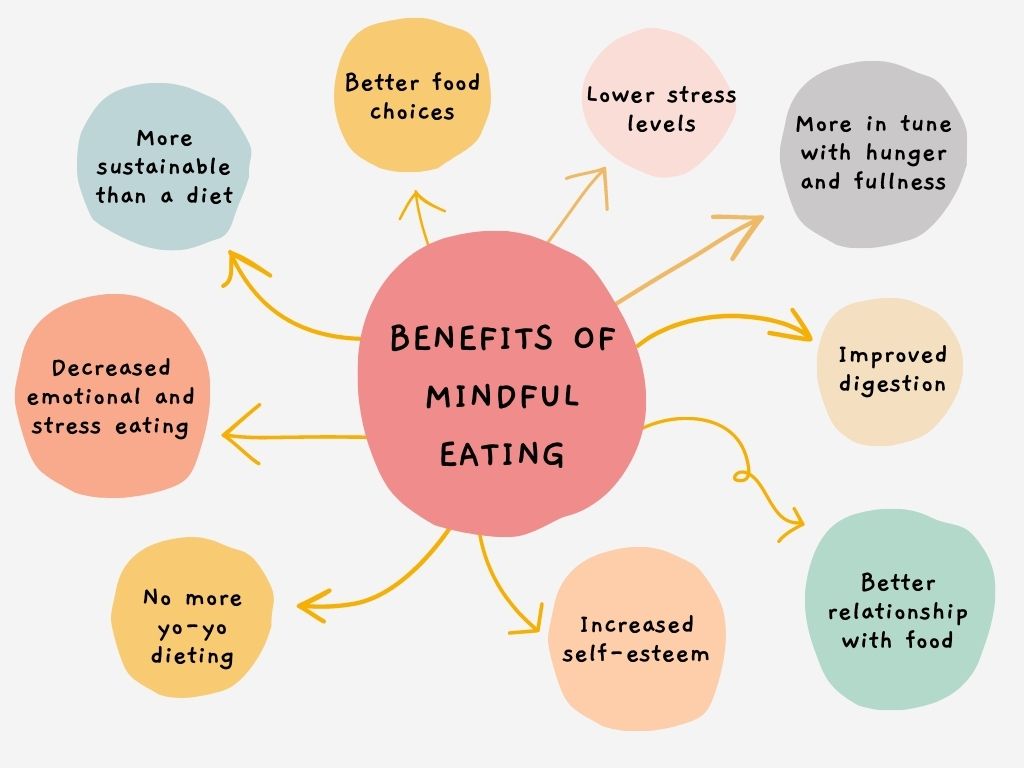
The practice of mindful eating is far more than a tool for weight loss; it is a powerful lifestyle intervention with scientifically recognized pathways to extended healthspan and longevity. Its benefits are deeply rooted in optimizing several key biological and behavioral systems.
1. Superior Digestive Health and Nutrient Absorption
Longevity is inextricably linked to the efficient functioning of the gastrointestinal (GI) tract. Mindful eating directly enhances this process.
- Activation of the Cephalic Phase: By engaging the senses (smell, sight, taste) and slowing down, we actively trigger the cephalic phase of digestion. This anticipatory response sends signals to the stomach and pancreas to release digestive enzymes and stomach acid before the food arrives, ensuring optimal breakdown and absorption of nutrients.
- Thorough Chewing: Mindful eating inherently promotes thorough chewing. This mechanical breakdown of food is the first, crucial step in digestion, significantly reducing the workload on the stomach and improving the bioavailability of vitamins, minerals, and other essential compounds.
- Reduced Stress-Related GI Distress: Eating quickly or under stress activates the “fight or flight” (sympathetic) nervous system, diverting blood flow away from the digestive organs and inhibiting enzyme production. Mindful eating, however, activates the “rest and digest” (parasympathetic) nervous system, ensuring the GI tract is in its optimal state for processing food, leading to less bloating, reflux, and discomfort.
2. Sustainable Weight Management and Metabolic Health
The ability to maintain a healthy weight is a major predictor of longevity, reducing the risk of chronic diseases like type 2 diabetes, heart disease, and certain cancers.
- Caloric Self-Regulation: By honoring true hunger and satiety signals, mindful eaters naturally consume fewer calories without feeling deprived or adhering to restrictive dieting rules. They stop eating when satisfied, preventing the overconsumption that is so common in distracted eating.
- Lower Incidence of Emotional and Binge Eating: Mindful practices train individuals to pause and identify the emotional triggers behind the urge to eat. This creates a critical gap between stimulus and response, allowing for a conscious choice rather than an automatic reaction, thereby curbing unhealthy coping mechanisms like emotional and binge eating.
- Improved Insulin Sensitivity: The link between fast eating, overconsumption, and insulin resistance is well-documented. By slowing down and preventing rapid ingestion of large meals, mindful eating helps maintain stable blood glucose levels, which is fundamental to metabolic health and a cornerstone of anti-aging strategies.
3. Stress Reduction and Psychological Well-being
Chronic stress is a known accelerator of biological aging. Mindful eating serves as a practical, daily form of stress intervention.
- Cortisol Reduction: The focused, non-judgmental attention required for mindful eating acts as a brief, therapeutic meditation. This repeated practice helps regulate the body’s stress response, lowering the chronic, damaging presence of the stress hormone cortisol, which is linked to inflammation and visceral fat accumulation.
- Enhanced Self-Compassion: Mindful eating fosters a non-judgmental stance toward food choices and body image. Instead of criticizing oneself for “bad” foods or eating patterns, the practice encourages curiosity and self-kindness, leading to a healthier, more balanced relationship with food—a significant factor in long-term mental health and resilience.
4. Reduced Risk of Chronic, Age-Related Diseases
The collective impact of better digestion, metabolic control, and lower stress translates directly into a reduced risk for the major diseases of aging. By encouraging a more present and deliberate approach to food, the practice often leads, organically, to healthier food choices because the individual is more attuned to how food affects their energy and well-being. This natural gravitation toward nutrient-dense, less-processed foods is a key mechanism for promoting longevity.
A Practical Guide to Cultivating Mindful Eating
Integrating mindful eating is a gradual journey of re-learning, not a sudden switch. It requires patience and a commitment to small, consistent changes. The following steps provide a structured framework for building a robust mindful eating practice.
I. The Pre-Meal Preparation Phase
The mindful process begins long before the first bite.
A. Assess Your True Hunger and Cravings Before reaching for food, take a “Belly Check” moment. Rate your hunger on a scale of 1 (starving/famished) to 10 (uncomfortably stuffed). The ideal eating zone is typically between a 3 (starting to feel true hunger) and a 7 (comfortably satisfied).
B. Eliminate External Distractions Commit to eating in an environment solely dedicated to food.
- Turn off the television and computer screen.
- Put your phone on silent and place it out of reach.
- Choose a designated spot, like a dining table, and focus only on the meal.
C. Practice Gratitude and Appreciation Take a moment before eating to acknowledge the origin of the food. Reflect on the farmers, the earth, and the hands that prepared the meal. This simple act of gratitude enhances the experience and deepens your connection to the food.
D. Serve Mindfully Use a smaller plate—research suggests this can subconsciously lead to appropriate portions. Focus on creating a visually appealing plate with a variety of colors and textures.
II. The Core Eating Ritual
This is the central application of presence and sensory engagement.
E. Start with a Sensory Observation Before the first bite, pause for 30 seconds.
- Observe the vibrant colors, shapes, and steam.
- Inhale the various aromas, distinguishing between the spices, proteins, and vegetables.
- Touch the food if appropriate (e.g., picking up a piece of fruit).
F. Take Small Bites and Chew Thoroughly Slow the pace dramatically. Place your utensils down after every mouthful.
- Place only a small amount of food on your fork or spoon.
- Aim to chew each bite until it is nearly liquid before swallowing. Notice how the taste and texture change as you chew.
- Take a brief pause, a “mini-break,” between each mouthful to truly savor the lingering flavor and reassess your satisfaction.
G. Engage Your Taste Buds Focus on isolating the different flavor profiles: sweet, sour, salty, bitter, and umami. Where do you notice the taste—on the tip of your tongue, the back, or the sides? Be curious, like a food scientist, exploring the meal.
H. Check In with Your Fullness Level Periodically, pause for a moment mid-meal—perhaps halfway through—to check your current level of satisfaction. Ask yourself, “How full do I feel right now?” If your rating is approaching a 7, slow down significantly. If it hits an 8, gently decide to stop. Leave a small amount of food behind if you are satisfied, recognizing that the feeling of fullness often lags behind the actual consumption.
III. Post-Meal Reflection
Mindfulness extends beyond the last bite, integrating the entire experience into self-awareness.
I. Note the Aftermath For five to ten minutes after the meal, check in with your physical and mental state.
- Physiological: Do you feel energized, sluggish, heavy, or light?
- Emotional: Do you feel content, guilty, relieved, or regretful? Observe these sensations without judgment; they are simply data points to inform future choices.
J. Practice Self-Compassion If you ate too fast, overate, or chose a food you later regretted, resist the urge to self-criticize. Treat it as a learning moment. Acknowledge the experience and commit to bringing more awareness to the next meal. Mindful eating is a practice, not a destination.
Overcoming Common Hurdles to Mindful Eating
The fast-paced nature of modern life presents several challenges to sustained mindful eating. Recognizing these hurdles and developing strategies to circumvent them is essential for long-term success.
1. The Time Constraint Myth
Many believe they don’t have time to eat slowly.
- Solution: Start small. Choose just one meal per day—perhaps breakfast or a solitary lunch—to dedicate 10-15 minutes of uninterrupted, mindful attention. Once this habit is established, expand it to other meals. The key is quality of attention, not quantity of time.
2. The Distraction Dependency
Habitual eating in front of a screen is a powerful, ingrained pattern.
- Solution: Create a clear, physical boundary. Never allow screens at the dining table. If you struggle, try substituting the screen with something else—a vase of flowers, a peaceful piece of music, or simply silence—to retrain the mind’s association with the eating environment.
3. The Emotional Eater’s Trap
Using food as a primary coping mechanism for difficult emotions.
- Solution: Implement the “HALT” check. Before eating, ask: Am I Hungry, Angry, Lonely, or Tired? If the answer is not true hunger, choose an alternative, non-food-related action to address the underlying emotion (e.g., a five-minute walk, a phone call to a friend, or a glass of water).
4. Perfectionism and Guilt
The tendency to label foods as “good” or “bad” and feel guilt after consuming the latter.
- Solution: Adopt the principle of non-judgmental awareness. All food provides information. Instead of guilt, cultivate curiosity. Ask: “How did this particular food make me feel?” The practice is about awareness and choice, not perfection or self-punishment.

Conclusion: The Quiet Revolution on Your Plate
Mindful eating, at its heart, is a quiet revolution. It challenges the prevailing culture of speed and distraction, offering a return to presence, intuition, and respect for the body’s innate wisdom. By integrating the principles of sensory engagement, mindful pause, and emotional awareness, we move beyond simple caloric calculation to a profound, intuitive, and self-regulating system of nourishment.
This practice is the ultimate investment in longevity. It optimizes digestion, stabilizes metabolism, manages weight sustainably, and acts as a daily antidote to the pervasive stress of modern life. It is the conscious choice to honor the journey of your food, the signals of your body, and the sacred act of sustenance. Start today with a single, deliberate bite. You are not just eating; you are practicing the art of living a longer, healthier, and more conscious life.