The Gut: More Than Just a Digestive Tube
For centuries, the gut was viewed simply as an organ responsible for digestion, absorption of nutrients, and waste elimination. However, modern science has revolutionized this perception. The gut is now often referred to as the “second brain” due to its vast network of neurons—a system so extensive it rivals the complexity of a cat’s brain.
The Enteric Nervous System (ENS)
The scientific term for the gut’s “brain” is the Enteric Nervous System (ENS).
-
A. Autonomy and Independence: The ENS is comprised of a dense sheath of approximately 500 million neurons embedded in the walls of the gastrointestinal tract, stretching from the esophagus to the anus. Crucially, the ENS can operate independently of the brain and spinal cord (the Central Nervous System or CNS), which is why it’s dubbed the second brain. It can manage the entire digestive process—controlling muscle contractions, regulating enzyme secretion, and monitoring blood flow—on its own.
-
B. Neurotransmitter Production: A staggering fact about the ENS is its role in producing neurotransmitters, the chemical messengers that regulate mood. For example, over 90% of the body’s serotonin—often called the “happy chemical”—and about 50% of the body’s dopamine are manufactured, stored, and used within the gut. This profound chemical connection is a primary reason why gut health so directly impacts mental health.
-
C. The Sheer Complexity: The ENS uses more than 30 different neurotransmitters, many of which are identical to those found in the brain, including acetylcholine, norepinephrine, and GABA (gamma-aminobutyric acid). This sophisticated chemical factory allows the gut to “feel” and react to environmental, emotional, and dietary stimuli.
The Gut-Brain Axis: The Bi-Directional Communication Highway
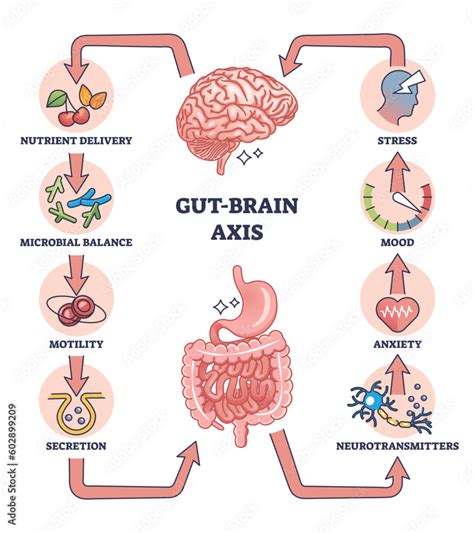
The Gut-Brain Axis is not a single nerve or chemical; it’s a sophisticated, multi-faceted communication system that allows the gut and the brain to constantly talk to each other. This dialogue flows in both directions—from brain to gut (top-down) and from gut to brain (bottom-up).
Key Communication Channels
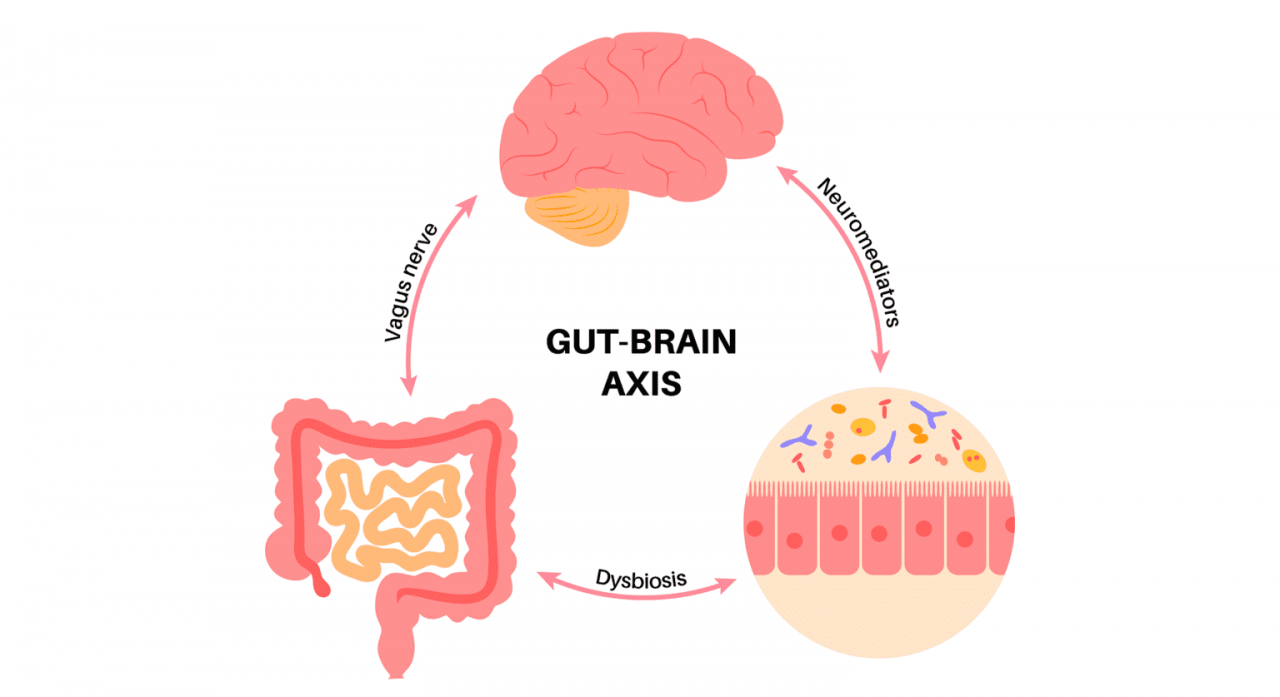
The GBA relies on four principal communication pathways to maintain homeostasis (balance) in the body:
-
A. The Vagus Nerve (The Superhighway): This is the single most important, direct, and physical connection between the brainstem and the gut. The vagus nerve is the longest cranial nerve, acting as a rapid, two-way telephone line. Approximately 80% of vagal fibers transmit information from the gut to the brain, and only 20% go the other way. This means the brain is constantly being informed about the state of your digestive system, a concept critical to understanding the link between gut inflammation and brain fog.
-
B. Hormonal Pathway (The Endocrine System): The gut lining (mucosa) is the largest endocrine organ in the body. It releases dozens of hormones, such as ghrelin (signals hunger) and leptin (signals satiety), that travel through the bloodstream to the brain’s hypothalamus, where they regulate appetite and energy expenditure. Disruptions in the gut can alter the release of these hormones, contributing to weight gain and metabolic disorders.
-
C. Immune System Pathway (The Inflammatory Link): The gut is home to about 70-80% of the body’s immune cells. When the gut barrier is compromised (a state often referred to as “leaky gut”), bacteria and toxins can slip into the bloodstream, triggering a widespread inflammatory response. Inflammation is a major component of this axis, as inflammatory signals (called cytokines) can cross the blood-brain barrier, directly affecting brain chemistry and potentially contributing to neurodegenerative diseases and mood disorders like depression.
-
D. Microbial Pathway (The Microbiome’s Voice): Perhaps the most revolutionary discovery in GBA research is the role of the gut’s inhabitants—the microbiome. The trillions of bacteria, fungi, and viruses in your gut communicate with the brain through their byproducts, collectively known as postbiotics.
The Microbiome: The Unsung Hero of the GBA
The human gut harbors a complex ecosystem of microorganisms, collectively called the gut microbiota. This community, which outnumbers human cells by a ratio of roughly 1.3:1, acts like an organ unto itself, playing a critical role in human health.
Mechanisms of Microbiota Communication
The bacteria in your gut are constantly “talking” to your brain through the chemicals they produce:
-
A. Short-Chain Fatty Acids (SCFAs): These are the most well-known microbial messengers. SCFAs—primarily butyrate, propionate, and acetate—are produced when the gut bacteria ferment indigestible dietary fibers (prebiotics).
-
Butyrate, in particular, is a crucial energy source for the cells lining the colon (colonocytes) and is known for its anti-inflammatory properties. It also has a demonstrated ability to strengthen the integrity of the gut barrier and the blood-brain barrier.
-
-
B. Microbial Neurotransmitters and Peptides: Gut microbes can directly produce many of the same neurotransmitters used by the human nervous system. For example, specific strains of Bifidobacterium and Lactobacillus can produce GABA, a primary inhibitory neurotransmitter that promotes calm and reduces anxiety. Certain E. coli strains can produce serotonin.
-
C. Tryptophan Metabolism: The gut microbiome significantly influences the availability of tryptophan, an essential amino acid and the precursor for serotonin. A healthy, diverse microbiome ensures adequate tryptophan conversion, which is vital for mood regulation and sleep (as serotonin is converted to melatonin).
Psychological and Cognitive Impact of the GBA
The idea that your gut feeling might actually be your gut speaking is more than just a metaphor; it’s a biological reality. The state of your GBA has profound implications for your mental and cognitive health.
Mood Disorders and Anxiety
-
A. Anxiety and Stress: The GBA is intricately linked to the Hypothalamic-Pituitary-Adrenal (HPA) axis, the body’s central stress-response system. A stressed brain can alter gut motility and secretion, leading to symptoms like Irritable Bowel Syndrome (IBS). Conversely, a compromised gut barrier and the subsequent inflammatory signals can hyperactivate the HPA axis, leading to chronic stress and anxiety. Studies show that people with IBS often have a higher prevalence of anxiety and depression, suggesting a shared pathophysiology centered on the GBA.
-
B. Depression: A wealth of research indicates that dysbiosis (an imbalance in the gut microbiome) is frequently observed in individuals with major depressive disorder (MDD). The inflammatory cytokines released from a “leaky gut” can enter the brain and interfere with neurotransmitter function, particularly serotonin and dopamine pathways, literally causing “sickness behavior” that manifests as depressive symptoms.
Cognitive Function and Neurodegeneration
-
C. Brain Fog and Memory: SCFAs produced by a healthy microbiome are crucial for optimal brain health. They can promote the production of Brain-Derived Neurotrophic Factor (BDNF), a protein essential for the growth, differentiation, and survival of neurons, which is critical for learning and memory. Dysbiosis-induced inflammation is linked to “brain fog” and impaired concentration.
-
D. Neurodegenerative Diseases: Emerging research suggests the GBA plays a pivotal role in the progression of conditions like Alzheimer’s and Parkinson’s disease. The hypothesis, known as the “Microbial Amyloid Hypothesis,” suggests that microbial-generated amyloids (proteins that clump together) might initiate or accelerate the formation of similar, pathological protein aggregates in the brain. The gut-brain connection is so strong that researchers are now exploring whether Parkinson’s disease might actually begin in the gut, potentially traveling to the brain via the vagus nerve.
Strategies for Optimizing and Nourishing Your GBA
Given the profound influence of the gut on overall health, actively nourishing and supporting the Gut-Brain Axis is one of the most powerful preventative and therapeutic strategies available.
Diet: The Cornerstone of GBA Health
-
A. Increase Prebiotic Fiber Intake: Prebiotics are non-digestible food components that selectively stimulate the growth and activity of beneficial bacteria (probiotics) in the colon. These are the fuel for your SCFAs. Excellent sources include inulin-rich foods (onions, garlic, leeks), green bananas, asparagus, and oats. Aim for a high diversity of plant-based foods to encourage a diverse, resilient microbiome.
-
B. Consume Fermented Foods (Probiotics): Probiotics are live microorganisms that, when administered in adequate amounts, confer a health benefit on the host. These foods contain beneficial bacteria that can transiently colonize the gut. Include foods such as natural yogurt (with live and active cultures), kefir, sauerkraut, kimchi, and tempeh in your daily diet.
-
C. Omega-3 Fatty Acids: Found in fatty fish (salmon, mackerel, sardines), walnuts, and flaxseeds, Omega-3s (specifically EPA and DHA) are renowned for their powerful anti-inflammatory properties. They are essential components of brain cell membranes and can modulate the gut microbiota composition to be more favorable.
-
D. Reduce Processed Foods and Sugar: Diets high in refined sugar, saturated fats, and artificial additives are known to promote the growth of pro-inflammatory bacteria, leading to dysbiosis and a compromised gut barrier. Reducing these items is essential for reducing systemic inflammation.
Lifestyle Interventions
-
A. Stress Management: Chronic stress is a powerful disruptor of the GBA, directly impacting gut motility and permeability via the HPA axis. Practices such as mindfulness meditation, yoga, deep-diaphragmatic breathing, and spending time in nature have been shown to increase vagal tone, thereby improving the gut-brain dialogue and promoting a more balanced state.
-
B. Regular Physical Activity: Exercise has a measurable effect on the diversity of the gut microbiome, often increasing the levels of SCFA-producing bacteria. It also acts as a powerful stress reliever, further benefiting the GBA indirectly.
-
C. Prioritize Sleep: The gut microbiome follows a circadian rhythm, just like the rest of the body. Chronic sleep deprivation can negatively alter the composition of gut bacteria and increase gut permeability, leading to inflammation and impaired cognitive function.
-
D. Judicious Use of Antibiotics: While often necessary, antibiotics should be used sparingly, as they are broad-spectrum and can decimate both harmful and beneficial bacteria, causing significant and long-lasting dysbiosis. After a course of antibiotics, aggressive repopulation with probiotics and prebiotics is highly recommended.
Future Directions and Concluding Thoughts
The field of Gut-Brain Axis research is rapidly expanding, promising new therapeutic avenues. We are on the cusp of personalized medicine based on an individual’s unique microbial signature.
The future of GBA therapeutics includes:
-
A. Psychobiotics: A new class of probiotics or prebiotics that are specifically targeted to have a positive effect on mental health by influencing the GBA. These are already being developed and tested for conditions like anxiety, depression, and stress-related disorders.
-
B. Fecal Microbiota Transplantation (FMT): While currently approved mainly for recurrent Clostridium difficile infection, FMT—the transfer of stool from a healthy donor to a recipient—is being explored as a potential treatment for refractory IBS, autism spectrum disorder, and possibly even MDD, offering a complete reboot of the gut ecosystem.
Conclusion
The line separating physical health and mental well-being is not as rigid as once thought. Your gut is intimately involved in how you feel, how you think, and how resilient you are to disease. By nurturing your gut through mindful dietary choices, effective stress management, and a healthy lifestyle, you are directly investing in the optimal function of your “second brain” and, by extension, the health of your entire being.
Understanding and actively nourishing the Gut-Brain Axis is not merely a trend; it is the foundation of true, integrated wellness in the 21st century.